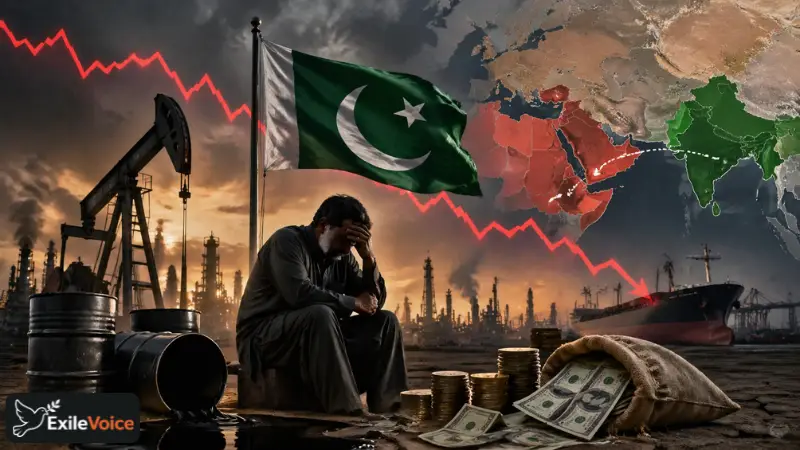
The economic landscape of Pakistan is currently facing a "perfect storm" of rising energy costs and shifting geopolitical perceptions that threaten to derail the country’s fragile stability. As global oil prices surge, with Brent Crude recently hitting the $120 mark, Pakistan finds itself caught in an unsustainable energy trap. For a nation that consumes approximately 450,000 barrels of oil per day while only producing about 80,000 barrels locally, the dependency on imports has become a critical vulnerability.
The financial strain is staggering. Reports indicate that Pakistan’s weekly import bill for oil has ballooned from $300 million to over $800 million. This fiscal hemorrhaging is occurring at a time when the country's foreign exchange reserves hover around a precarious $15 billion. To put this in perspective, the recent 60-day conflict in the Middle East saw the United States spend $25 billion on ammunition alone—a figure that dwarfs Pakistan’s entire national reserve and highlights the extreme disparity in regional financial resilience.
Beyond the immediate fuel crisis, a more systemic shift is occurring in how international financial institutions perceive Pakistan. The World Bank has notably reassigned Pakistan from the "South Asia" category to the "MENA" (Middle East and North Africa) region. This is far more than a bureaucratic reshuffling; it is a fundamental reclassification of Pakistan’s economic identity. While South Asian neighbors like India and Bangladesh are projected to grow at rates around 6.5%, the MENA region’s average growth is a stagnant 1.8%. By grouping Pakistan with MENA, the World Bank is signaling that Pakistan is no longer viewed as a fast-growing emerging market but rather as a volatile, war-exposed economy with a trajectory defined by instability rather than industrial growth.
This "de-listing" from the South Asian growth story reflects a grim reality. The government has been forced into "part-time" operations, with fuel allowances slashed and public institutions operating on reduced schedules. While political leaders attempt to project a "Middle Power" status, the economic indicators reveal a different story: one of a nation struggling to keep the lights on while its regional standing is downgraded by the global arbiters of development logic.