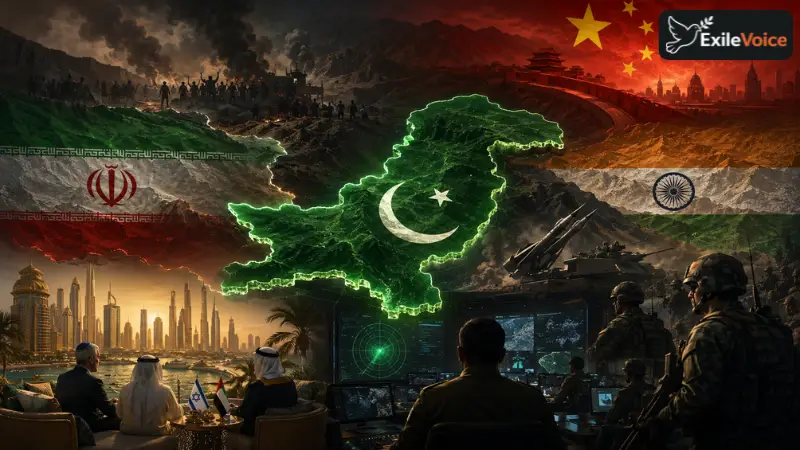
While domestic politics remain volatile, Pakistan’s military leadership is simultaneously grappling with a rapidly shifting regional security architecture. The "Four Problems" identified, Imran, Iran, Israel, and India, are interconnected nodes in a complex geopolitical web. The recent secret visit of Israeli Prime Minister Benjamin Netanyahu to the UAE, treated with "royal honors," signals a deepening of the Abraham Accords that threatens to isolate Pakistan’s traditional stance in the Middle East.
The tension is palpable. While Israel attempts to drive a wedge between Muslim nations for local political approval, Pakistan finds itself in a precarious position. Regional powers like Saudi Arabia are engaging in "tit-for-tat" deterrence with Iran, evidenced by recent limited strikes aimed at showing defensive capability without escalating into a full-scale war. Pakistan, having recently exchanged strikes with Iran itself, must walk a tightrope. The "Iran Problem" is not just about border security; it is about avoiding a broader regional conflict while maintaining its "Iron Brother" relationship with China.
China remains the anchor in this storm. The recent interactions between Donald Trump and Xi Jinping showcase a level of mutual respect and strategic calculation that Pakistan struggles to emulate. While China maintains its cities without paralyzing its economy, it continues to keep Pakistani officials on "speed dial," ensuring Pakistan remains within its orbit. However, this reliance on China is being tested by the "India Factor". India’s alignment with Western interests and its participation in regional blocks like BRICS puts immense pressure on Pakistan’s military to modernize its deterrents, such as the Fatah-4 missile system.
The most alarming trend is internal. In Khyber Pakhtunkhwa (KP), public sentiment is turning sharply. The viral slogan "There is a uniform behind this terrorism" represents a dangerous shift in how the military's counter-terrorism efforts are perceived. This internal dissent, coupled with the diplomatic campaign to corner Pakistan, creates a multi-front challenge.