

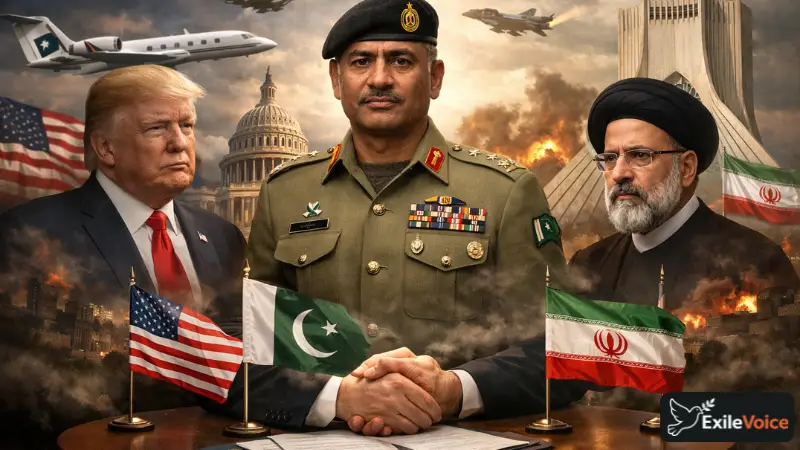
The geopolitical landscape of 2026 has witnessed an unprecedented elevation of Pakistan’s role on the world stage, specifically as the primary mediator between the United States and the Islamic Republic of Pakistan. In a recent high-stakes interview, President Donald Trump clarified that despite several nations offering their diplomatic services to bridge the gap between Washington and Tehran, Pakistan has been streamlined as the "only mediator." This endorsement signifies a major shift in American foreign policy, moving away from multilateral European or regional frameworks like the JCPOA towards a more direct, Pakistan-led channel.
Central to this diplomatic surge is the figure of General Asim Munir, who has transitioned from a domestically controversial figure to a globally recognized "superman" of diplomacy. The White House has credited the Pakistani leadership, both the civilian government under Prime Minister Shehbaz Sharif and the military establishment, with being "incredible mediators" who are successfully working out a deal that others could not. This "success" is being framed as a strategic triumph for Islamabad, which has managed to maintain trust with both a volatile Trump administration and a cautious Iranian regime.
The mechanics of this mediation are deeply rooted in high-level security negotiations. Reports indicate that the discussions have moved past general pleasantries to the core issues of nuclear enrichment and regional stability. General Munir’s recent trips to Tehran and his anticipated visit to Washington, D.C., in a new Gulfstream jet, underscore the seriousness of these talks. The goal is to establish a sustainable peace that prevents nuclear escalation while allowing for sanctions relief, a prospect that has already begun to stabilize markets and initiate a temporary ceasefire in regions like Lebanon.
However, this international acclaim is met with a sharp dichotomy within Pakistan. While the global community lauds the "Field Marshal" and the Prime Minister for their diplomatic prowess, the domestic perception remains fractured. Critics argue that the same leadership celebrated as peacemakers abroad is viewed as "bad men" at home due to internal political crackdowns, censorship, and the incarceration of opposition figures. This duality raises a significant question: can a state maintain a long-term reputation as a global stabilizer if its internal house remains divided and characterized by political coercion?
Ultimately, the Trump administration's preference for Pakistan as the sole mediator reflects a pragmatic "America First" approach. By bypassing traditional allies and focusing on a singular, capable partner like Islamabad, Trump seeks a quick, decisive win to bolster his legacy. For Pakistan, while the short-term gains in prestige and financial rollovers from allies like Saudi Arabia are evident, the long-term challenge will be to translate this external success into domestic stability and genuine democratic reconciliation.

