The geopolitical landscape of the Middle East is currently teetering on the edge of a significant escalation as the United States prepares for what observers describe as a potential large-scale military engagement with Iran. Reporting from Washington, analysts have noted a palpable shift in the strategic posture of the Trump administration, signaling that the window for diplomacy and ceasefire negotiations may be closing rapidly. The immediate catalyst for this heightened tension is the announcement of "Operation Freedom," a mission framed by President Donald Trump as a humanitarian and commercial necessity to rescue tankers and trade vessels currently stranded in the northern reaches of the Strait of Hormuz.
The humanitarian narrative surrounding Operation Freedom centers on the plight of sailors trapped on vessels without adequate supplies of food and water due to the ongoing maritime standoff. However, the timing of this operation raises significant questions among international relations experts. The Strait has been a flashpoint for weeks, yet the sudden urgency to "rescue" these vessels suggests a deeper tactical motive. Observers suggest that the recent weeks of ceasefire talks and back-channel negotiations, including proposals sent through Pakistan, may have served as a diplomatic camouflage, allowing the United States to consolidate its military assets and refine a new strategy for engagement.
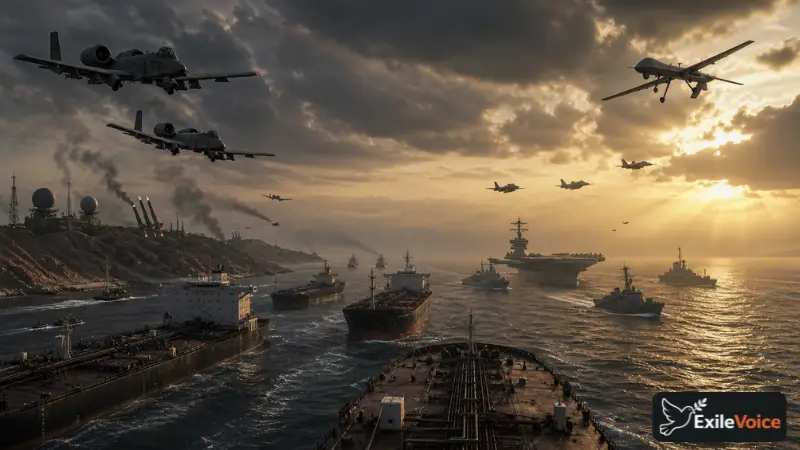
The scale of preparation supporting this shift is immense. Reports indicate that the U.S. has authorized approximately $86 billion in arms sales to Gulf allies, including the United Arab Emirates, Kuwait, and Qatar. Furthermore, tracking data shared by academic experts highlights a massive airlift of military equipment from Europe and the United Kingdom toward the Persian Gulf. This buildup, combined with the presence of three U.S. aircraft carriers in the region, underscores a readiness for a multi-front confrontation. While the U.S. Central Command (CENTCOM) has officially stated that the operation will utilize over 100 land and air-based platforms, including unmanned drones and A-10 Thunderbolt II aircraft, the strategic goal appears to be the provocation of an Iranian response.
If Iran attempts to interfere with the movement of these tankers, it would provide the necessary "trigger point" for a much larger American strike against Iranian coastal defenses and military infrastructure. This "trap" is being set at a time when President Trump is reportedly under intense pressure to secure a decisive victory before his upcoming meeting with Chinese President Xi Jinping. By positioning himself as a "victorious conqueror" who has settled the Iranian issue, Trump likely hopes to enter trade negotiations with China from a position of absolute strength.
The situation is further complicated by reports of a recent projectile attack on an oil tanker near the coast of Fujairah, UAE. While the source of the attack remains unconfirmed, it is widely suspected to be an Iranian drone operation intended to signal that any American maneuver will be met with asymmetric resistance. As the world watches the "Monday morning" developments in the Middle East, the risk of a miscalculation leading to a full-scale regional war has never been higher.