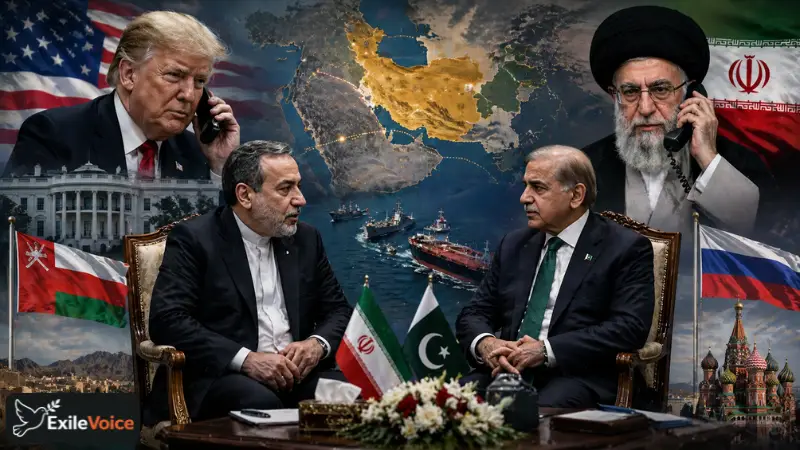
As the conflict between Iran and the United States approaches its 60th day, the role of regional intermediaries is being recalibrated. Pakistan, which has long served as a vital "strategic bridge" between Tehran and Washington, is witnessing a transition in its diplomatic visibility. While the status of Islamabad as a primary physical venue for negotiations has seen a recent downgrade, its relevance as a communication channel remains intact. This shift was underscored by the recent four-hour visit of Iranian Foreign Minister Abbas Araghchi to Pakistan, followed immediately by his departure for Russia.
The current diplomatic landscape is defined by "telephone diplomacy." Donald Trump’s recent assertions that negotiations can be handled via secure telephone lines, coupled with a firm refusal to travel to Islamabad for direct talks, indicates a hardening of the U.S. position. This "neither play nor let play" attitude from both sides has led to the lifting of the prolonged security lockdown in Islamabad, much to the chagrin of local officials who were anticipating the prestige of an "Islamabad Accord." Instead, the world may be heading toward what some are calling the "iPhone Accord," where terms are dictated and discussed remotely rather than through formal summits.
Despite the U.S. pivot, Iran continues to utilize the Pakistani channel, suggesting that Islamabad maintains a unique level of "access control" even if it cannot dictate the speed or terms of peace. This diplomacy is further complicated by the involvement of other regional players like Oman and Russia. Oman serves as a partner in managing the Strait of Hormuz, having avoided the brunt of Iranian attacks directed at other Gulf neighbors. Meanwhile, Russia remains the critical "nuclear partner," likely to serve as the safe-keeper for Iran's enriched uranium, a role reminiscent of the 2015 JCPOA framework.
The maintenance of a ceasefire, even in the wake of an assassination attempt on Trump, suggests that sophisticated, complex negotiations are ongoing behind the scenes. Iran is currently managing its internal terms with its partners, and until those conditions are finalized, a definitive counter-offer to the U.S. is unlikely. For Pakistan, the challenge remains internal legitimacy versus external utility. As noted in recent critiques of "defensive realism," a state’s strategic value on the global stage does not automatically translate to democratic legitimacy at home. The disconnect between Pakistan's success as a diplomatic mediator and its internal political struggles, including allegations of electoral fraud and the suppression of political dissent, continues to define the nation’s dual reality.