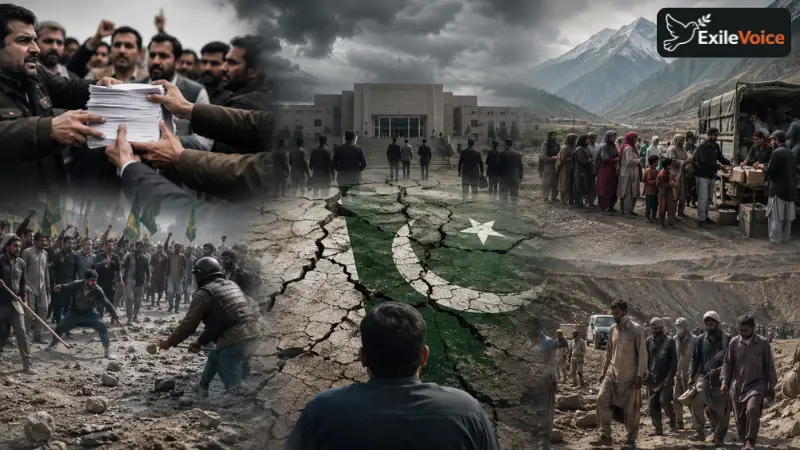
The current political environment in Pakistan is marked by intensified scrutiny of governance practices, accusations of nepotism, and regional challenges in Azad Kashmir and Balochistan. Political figures and institutional leaders are under pressure as public dissatisfaction with the status quo becomes increasingly visible.
In governance, there have been reports of local political representatives taking matters into their own hands, such as the incident involving a provincial assembly member seizing official records from a government office. Such actions reflect a broader frustration with bureaucratic corruption and the perceived inefficiency of government departments. While these actions are framed as anti-corruption measures, they also highlight a breakdown in institutional order and the rule of law.
Simultaneously, internal party dynamics are under the microscope. The political appointment of specific individuals to various senior advisory and legislative roles has sparked debate among party workers regarding the criteria for these selections. Questions are being raised about meritocracy, with critics noting that certain figures seem to be given roles regardless of their prior visibility or service during the party’s time in opposition.
The situation in Azad Kashmir remains particularly sensitive, with political campaigns characterized by friction and public resentment. Recent election-related activities have seen clashes and strong opposition from the public against major political parties, indicating a disconnect between political leaders and the local populace. This is compounded by reports of humanitarian crises in the region, where internet outages, bank closures, and supply chain disruptions have necessitated external aid, such as that provided by the Edhi Foundation.
Finally, the situation in Balochistan continues to be a major point of contention. The recurring targeted violence against laborers based on their regional background demonstrates a failure in maintaining security and promoting national unity. Furthermore, criticism has been directed at the handling of Balochistan-related conferences, where the inclusion of controversial figures by official channels has been viewed as a lack of seriousness by the authorities in addressing the province's genuine grievances.
For Pakistan, the path forward requires a re-evaluation of how political decisions are made, a commitment to genuine merit-based governance, and a more empathetic approach to regional stability and public welfare.