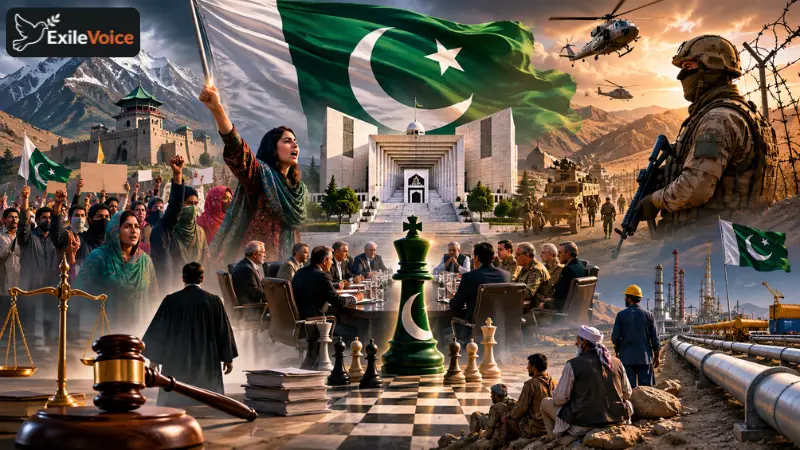
Pakistan’s current socio-political environment is characterized by a high degree of volatility, underscored by intense legislative, judicial, and security-related challenges. The domestic landscape has seen significant shifts, including the appointment of new leadership in regions such as Gilgit-Baltistan, which has drawn criticism regarding the transparency of political processes and the coalition of disparate parties to maintain administrative control.
Simultaneously, the legal environment has become a flashpoint for controversy. The imposition of long-term imprisonment sentences on prominent political leaders, including figures from the PTI, has sparked intense debate over the adherence to due process and the independence of the judicial system. These developments, coupled with the sentencing of activists like Mahrang Baloch, illustrate a tightening of state control over dissent. Reports suggest that despite the lack of direct evidence linking activists to specific acts of violence, the punitive measures reflect a broader trend of utilizing legal frameworks to manage political opposition and civil society movements.
Geopolitically, Pakistan faces the delicate task of balancing its international relations. The evolving discourse around the Iran-Pakistan gas pipeline presents a potential opportunity for economic relief, provided that regional stability, particularly in Balochistan, can be managed effectively. However, the project remains fraught with historical complications, ranging from international sanctions to the underlying security crises that have long hindered the integration and development of border regions. As the country navigates these internal and external pressures, the disconnect between state rhetoric and the reality on the ground continues to be a central theme in Pakistan's complex political trajectory.