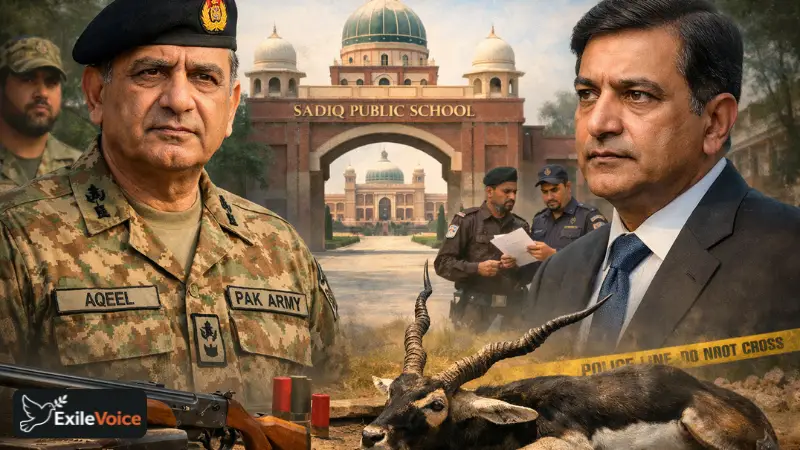
The sanctity of prestigious academic institutions often relies on the autonomy of their governing bodies and the strict adherence to meritocracy. However, recent developments surrounding the Sadiq Public School in Bahawalpur have sparked a significant debate regarding the limits of military influence over civilian educational heritage. Sadiq Public School, established by the Nawab of Bahawalpur and modeled after Aitchison College, stands as a cornerstone of educational excellence in South Punjab. Its legacy is currently being tested by a high-stakes standoff between the local military leadership and the school’s Board of Governors.
The controversy began when Lieutenant General Muhammad Aqeel, the Corps Commander of Bahawalpur, reportedly proposed the appointment of a retired Brigadier, Abdul Hafeez, as the school's principal. The Board of Governors, comprising seasoned and highly respected former bureaucrats such as Raheel Siddiqui and Fazeel Asghar, reviewed the candidate's profile and ultimately rejected the nomination. Their decision was rooted in the belief that the candidate’s professional background did not align with the academic and cultural standards required for such a historic institution.
In a move that many observers characterize as institutional overreach, the rejection of the military’s preferred candidate was met with legal intimidation. Shortly after the board’s decision, First Information Reports (FIRs) were filed against senior board members, including Raheel Siddiqui, a former Principal Secretary known for his impeccable integrity. The charges, which involve allegations of illegal hunting, are viewed by many as a manufactured pretext to pressure the board into submission.
This situation highlights a troubling trend where professional disagreement is met with administrative retaliation. Raheel Siddiqui, in particular, represents a class of civil servants whose commitment to institutional health outweighs personal safety or political convenience. By standing their ground, the board members are defending the principle that educational institutions must be led by those with relevant expertise rather than those with powerful connections. The resolution of this conflict will serve as a bellwether for the future of institutional independence in Pakistan.