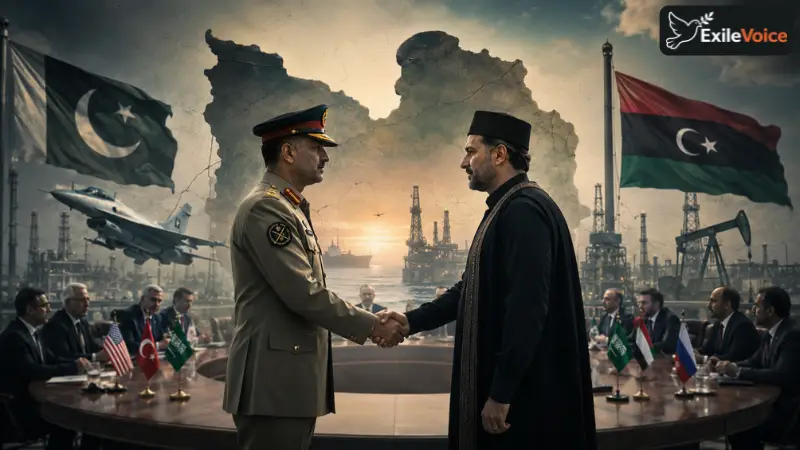
The current foreign policy approach of Pakistan’s military establishment can be characterized as a sophisticated blend of military diplomacy and industrial export strategy. By examining the recent activities of the armed forces, ranging from mediation efforts in Libya to the sale of military hardware, a clear pattern of a "long game" emerges.
The central pillar of this model is the dual application of diplomacy and salesmanship. On one hand, the Pakistani military engages in high-level geopolitical mediation, positioning itself as an indispensable partner for major global powers, including the United States. This includes facilitating stability in conflict-prone zones where these global powers have vital interests, such as energy security.
Simultaneously, the military establishment is aggressively promoting its indigenous defense industry. The export of the JF-17 Thunder aircraft to countries like Azerbaijan demonstrates this push. By providing both the technology and the training, Pakistan’s Air Force is effectively integrating its military industrial output into the geopolitical strategies of its partners. This approach allows Pakistan to strengthen ties with regional allies while generating critical revenue and enhancing its geopolitical leverage.
Furthermore, this model extends to exploring new strategic avenues, such as the recent engagements in Belarus. These visits by high-ranking officials signal an intent to align with broader regional dynamics, potentially opening doors for collaborative defense programs and technology exchanges that align with the interests of major global players like Russia.
However, this business model faces significant internal and external challenges. Domestically, the establishment must contend with issues of political legitimacy, security challenges in provinces like Balochistan, and the impact of its governance on public perception. Externally, the risk of international sanctions and the scrutiny of global powers remain persistent hurdles. The effectiveness of this model is tested by its ability to navigate the complex, often conflicting interests of its partners without compromising its national objectives.
As the global landscape continues to shift, Pakistan’s military establishment is betting that its ability to act as both a diplomatic bridge and a defense supplier will secure its relevance. Whether this strategy succeeds in the long term depends on its capacity to manage these conflicting pressures and provide tangible results for both its international partners and its own strategic interests.