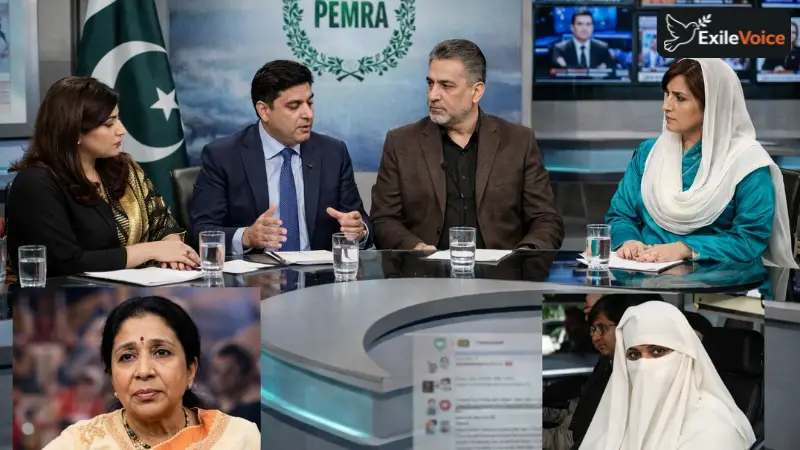
The media landscape in Pakistan is currently embroiled in a debate over professional standards, selective reporting, and the use of social narratives to deflect accountability. A recent controversy involving PEMRA and a major news network over the broadcasting of Indian content during a tribute to the late singer Asha Bhosle has reopened the discussion on freedom of expression. While the network argued that "art knows no borders," critics pointed out a perceived inconsistency in the application of this high moral ground.
This debate highlights a broader issue of "selective journalism," where media houses may champion liberal values in certain contexts while remaining silent or participating in the sensationalized targeting of political figures and their families. The controversy surrounding the legal cases of Bushra Bibi and the restricted coverage of incarcerated political leaders serves as a backdrop to this critique. Analysts argue that for the media to be a true fourth pillar of democracy, its commitment to ethics and freedom of speech must be consistent across all political and social divides.
Another facet of this cultural clash is the "Artist Card" or "Woman Card," often used by media personalities to deflect professional criticism. A recent incident involving a high-profile journalist’s choice of attire at a public event led to widespread social media discussion. The journalist’s defense, claiming the images were taken from "private angles" or edited to appear "ugly", has been met with skepticism. In the age of digital transparency, the distinction between private and public spheres is increasingly blurred, especially for those who occupy public offices or influential media roles.
The professional insight here is that accountability in the public eye is not a gendered or partisan issue. When a public figure chooses to appear in a certain capacity at a public event, they are subject to the same scrutiny and freedom of speech they themselves advocate for. Using identity-based defenses to shut down objective criticism undermines the progress of professional discourse. As Pakistan’s civil society becomes more digitally literate, the effectiveness of these traditional "cards" is diminishing, necessitating a return to substantive, principled journalism.