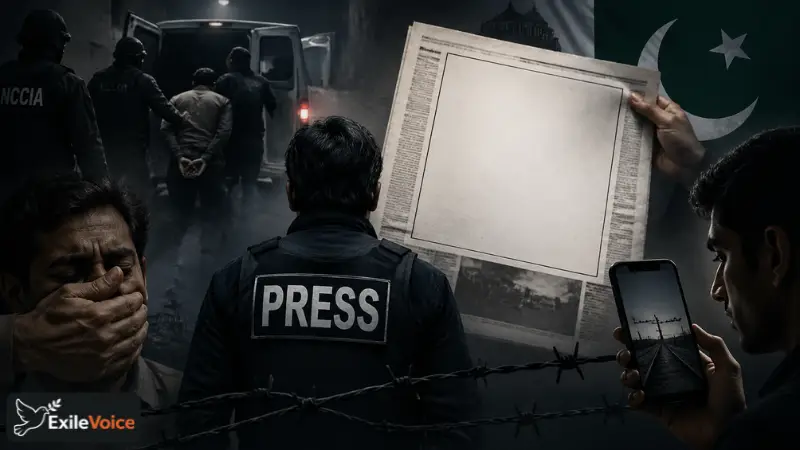
The landscape of Pakistani journalism is currently navigating one of its most turbulent periods, characterized by a sharp rise in state-sponsored censorship and the targeting of veteran media professionals. Recent events in Islamabad highlight a disturbing trend where the line between legal oversight and administrative intimidation has blurred. The disappearance of senior journalist Fakhar Zaman, allegedly at the hands of the National Cyber Crimes Investigation Agency (NCCIA), serves as a poignant example of the escalating pressure on those who maintain independent editorial stances. Reporters and analysts are increasingly being coerced into following a specific state-narrative, with non-compliance often leading to abductions or the filing of dubious legal cases.
This climate of restriction is not limited to individual journalists but extends to international publications. A striking visual representation of this censorship appeared on the front page of the New York Times international edition in Pakistan, where a major portion of the page was left blank. This void was created by the forced removal of an investigative piece concerning the internal grievances of the Shia community in Pakistan and the geopolitical fallout of recent tensions with Iran. This "blank space" strategy is a haunting callback to the era of General Zia-ul-Haq, where military censors would physically vet newspaper proofs before printing. The recurrence of such tactics in the digital age signals a significant regression in the country’s democratic health.
Furthermore, the state’s sensitivity to digital expression has reached a point where metaphorical speech is being criminalized. The case of Khurram Nazir, a young man booked for a social media post where he used a geographical metaphor regarding a railway crossing, underscores the hypersensitivity of the current regime. For media professionals and citizens alike, the message is clear: while money laundering or administrative corruption may often be overlooked by those in power, the act of "independent thinking" and "vocalizing dissent" is treated as a high-stakes crime. This environment not only stifles domestic discourse but also severely damages Pakistan's international reputation as a country capable of upholding fundamental human rights and freedom of the press.