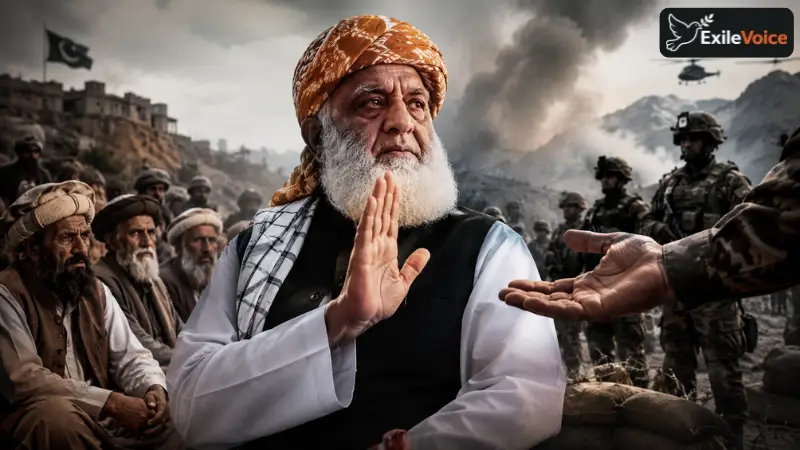
A striking development in Pakistan's political discourse is the recent statement by Maulana Fazlur Rehman, who has openly challenged the military leadership's approach to the escalating security crisis in Balochistan and Khyber Pakhtunkhwa. In a blunt critique, Rehman questioned the state’s expectation for tribal leaders to mobilize local militias against militants. He argued that the responsibility for national security, and the associated risks of combat, rests solely with the professional armed forces who are compensated and equipped for this specific purpose.
Rehman’s refusal to form militias serves as a warning against being drawn into regional conflicts that could perpetuate long-term enmity and violence within tribal territories. He framed the state’s request as an attempt to shift the burden of security onto civilian shoulders, avoiding the professional duties for which the military is funded. This rejection is highly significant, signaling that tribal and political leaders are increasingly unwilling to cooperate with state security policies that they perceive as ineffective or detrimental to the long-term stability of their regions.
The tension highlights a broader disillusionment with the military establishment's handling of terrorism. As incidents of violence continue to rise, the rhetoric surrounding "sacrifices" is being met with skepticism. Leaders like Rehman are emphasizing that the military's current strategy is failing to contain threats, and there is growing public demand for transparency and accountability regarding the escalating security situation. This stance represents a fundamental shift where regional power brokers are no longer willing to unconditionally support the military’s security agenda, potentially further squeezing the space for the state’s current administrative policies.