

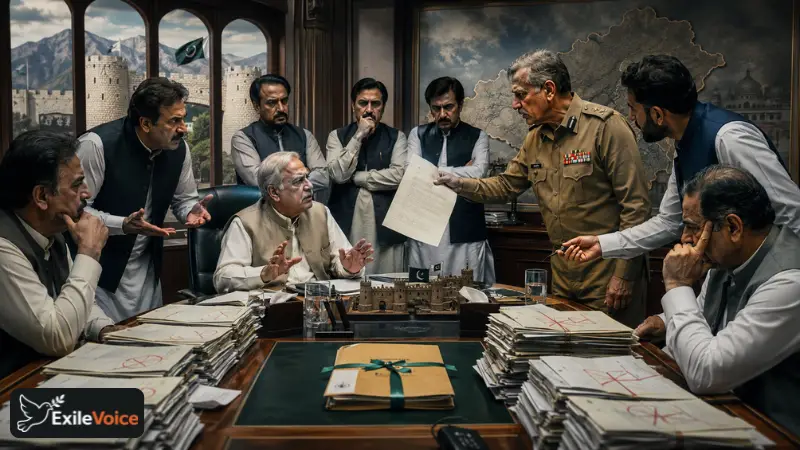
The governance landscape in Khyber Pakhtunkhwa (KP) has recently been rocked by a high-stakes internal conflict within the Pakistan Tehreek-e-Insaf (PTI) party. At the heart of the controversy is a leaked letter from Brigadier (Retd) Musaddiq Abbasi, a member of a high-level accountability committee formed by Imran Khan, addressed to Meena Khan Afridi, a senior minister in the KP government. The correspondence levels serious allegations of corruption regarding a procurement tender where, out of 32 bidding companies, 31 were reportedly disqualified to award the contract to a single, allegedly blacklisted entity.
This development highlights a growing fracture within the provincial administration. While the committee, which includes former Governor Shah Farman and senior lawyer Qazi Anwar, was established to maintain the party’s "anti-corruption" brand, its actions have sparked intense debate. Critics and insiders suggest that these probes may not be entirely impartial. There is a prevailing narrative that the current Chief Minister, Ali Amin Gandapur, may be utilizing these accountability mechanisms to target political rivals within his own party. Previous targets of this committee include reputable figures like Taimur Saleem Jhagra and Atif Khan, both of whom have publicly defended their records and questioned the motives behind the inquiries.
The professional insight here suggests a dangerous precedent: when accountability tools are perceived as instruments of internal "target killing" or political maneuvering, they lose their legitimacy. For the KP government, the challenge is twofold. First, they must address the specific technical irregularities in the procurement process to ensure transparency. Second, the party leadership must bridge the gap between rival factions to prevent a total collapse of administrative focus. As Imran Khan remains incarcerated, the lack of a unifying central command is allowing these provincial power struggles to spill into the public eye, potentially damaging the party’s reputation ahead of future electoral cycles.

