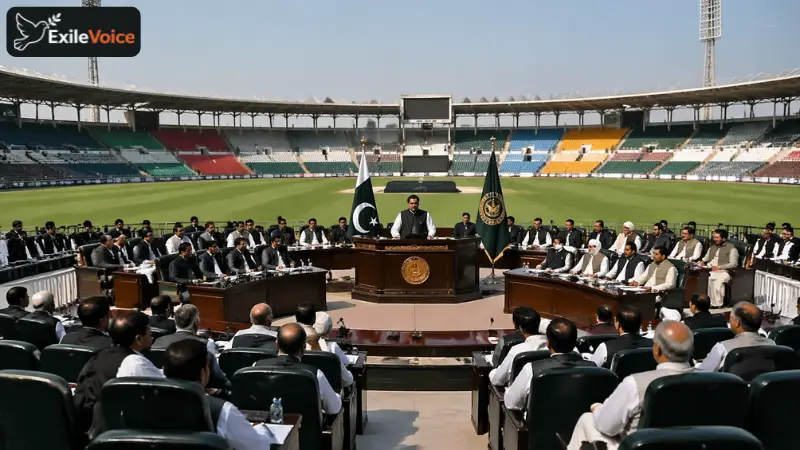
In an unprecedented move that has sparked intense national debate, the Khyber Pakhtunkhwa (KP) Assembly recently held a formal session within a cricket stadium rather than the traditional legislative halls. Presided over by Speaker Babar Saleem Swati, this departure from parliamentary norms represents a unique moment in Pakistan’s political history, serving as both a legislative meeting and a high-profile protest.
Proponents of the move argue that the KP Assembly holds a unique position as the only provincial body elected with a "genuine public mandate" based on Form 45 data. By moving the session to a public stadium, the government aimed to amplify its voice against the federal administration and the incarceration of former Prime Minister Imran Khan. The primary objective was visibility; a session held in a sports arena naturally attracts international media attention in a way a standard assembly hall meeting cannot. It sends a visceral message of defiance, signaling that the provincial leadership is "stepping out" of the system to protest perceived federal overreach and the "abduction" of their party leader.
However, the session has not been without its critics. Investigative reports and local commentary suggest that the execution fell short of the revolutionary image it sought to project. While the setting was grand, the stadium was not filled with the masses, leading some to label the event a "political drama" intended for social media clips rather than substantive change. Critical voices, such as journalist Muhammad Fahim, noted that the session caused significant public inconvenience. While members allegedly enjoyed air-conditioned lounges and refreshments within the stadium's VIP areas, ordinary citizens of Peshawar were left stranded in massive traffic jams under a scorching sun .
Furthermore, political analysts question the strategic utility of the location. If the goal was maximum pressure, critics suggest that holding a session outside Adiala Jail or in Lahore would have been a more potent challenge to the status quo. The session also faced a boycott from opposition members, who viewed the move as an unnecessary expense and a deviation from serious governance.
Ultimately, the stadium session highlights the deepening polarization within Pakistan’s federation. While it successfully generated "activity" and kept the provincial narrative in the headlines, its long-term impact on the political landscape remains to be seen. Whether this becomes a recurring tool for provincial defiance or remains a one-off spectacle will depend on how the KP leadership builds upon this momentum.