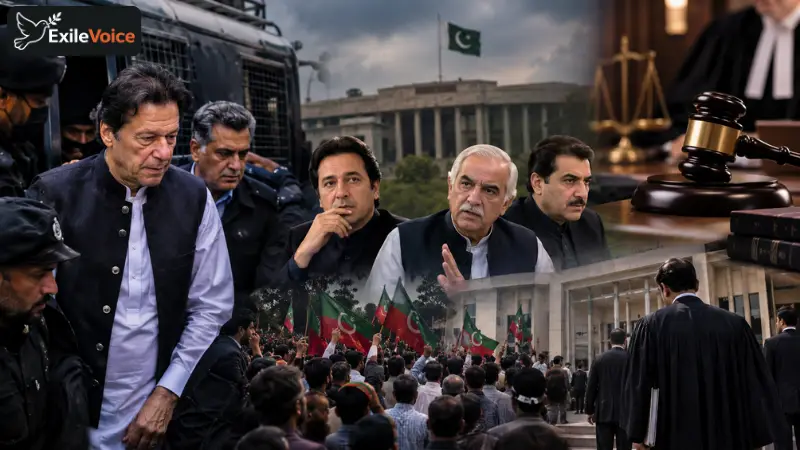
The political landscape of Khyber Pakhtunkhwa (KP) and the federal judiciary in Islamabad are currently embroiled in controversies that challenge the concept of "Dichotomy of Power." In KP, a misinformation campaign recently targeted the Speaker of the Provincial Assembly, alleging he had introduced a bill seeking lifetime perks, such as Grade 17 secretaries and domestic staff. However, investigative insights now reveal that this was a "fake news" plant, likely originating from internal party rivalries, aimed at tarnishing his reputation.
The actual legislative intent was far more focused on institutional protection than personal gain. The Speaker sought to ensure that while in office, the Speaker of the House cannot be arrested or have their residence raided without due process. In the current climate of "political engineering" in Pakistan, where opposition members frequently face sudden detentions, this move is viewed by some as a necessary safeguard for the independence of the legislative branch. It reflects a growing fear among lawmakers that the "stick" of the state is being used to coerce political outcomes.
Parallel to this, the federal judiciary is facing its own internal struggle. Chief Justice Yahya Afridi recently faced a dilemma regarding the Judicial Commission meeting and the transfer of judges. Initially, there were concerns that transferring judges like "Assistant Commissioners or Patwaris" would compromise the independence of the judiciary and signal that judges are subordinate to the executive or military-backed "Form 47" administration. Despite an initial reluctance to call the meeting, a majority of the commission members pushed for it, leading to a compromise where the Chief Justice agreed to proceed.
These developments point to a broader theme in Pakistani governance: the erosion of institutional boundaries. Whether it is the promotion of a judge's relative in KP, sparking cries of favoritism, or the "musical chairs" of judicial transfers in Islamabad, the perception of a "captured state" remains a significant hurdle. For true stability, these institutions must move away from serving as tools for political leverage and return to their roles as neutral arbiters of law and governance.