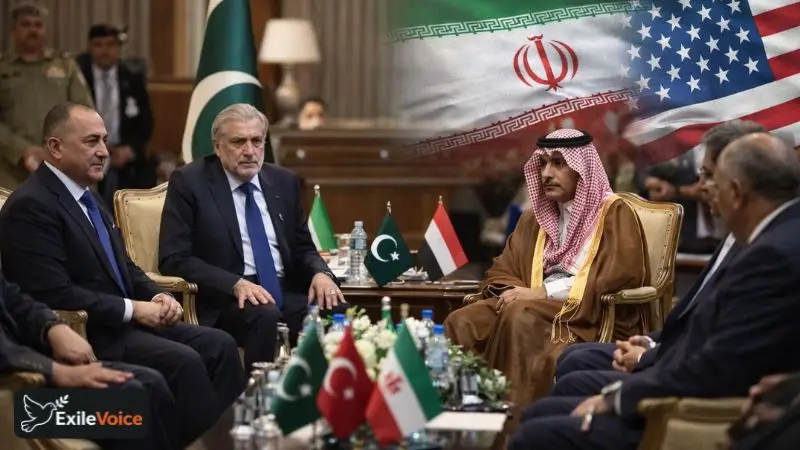
In recent days, the halls of power in Islamabad have become the epicenter of a frantic diplomatic effort aimed at averting a catastrophic escalation in West Asia. Pakistan’s Deputy Prime Minister and Foreign Minister, Ishaq Dar, has taken a central role in what state-backed media and several prominent journalists are portraying as a historic mediation attempt. The narrative being projected suggests that Pakistan is uniquely positioned to host long-awaited talks between the United States and Iran, potentially providing an "off-ramp" for the Trump administration and the Iranian leadership.
However, seasoned analysts, including Wajahat S. Khan, caution against accepting this "Lego-like" construction of peace at face value. Using the analogy of a Lego set, which appears impressive and structured from the front but is often hollow and fragile from the rear, Khan suggests that the current Pakistani diplomatic initiative may lack the structural integrity required for long-term success. While local news outlets have been quick to publish "breaking news" regarding the imminent nature of these talks, the reality on the ground remains obscured by conflicting interests and a history of failed backchannel communications.
The stakes for Pakistan are immense. By positioning itself as a neutral ground for reconciliation, the current government seeks to bolster its international standing and prove its strategic relevance to both Washington and Riyadh. Yet, this "Bootistan" (a reference to the influence of the military establishment) approach to foreign policy is fraught with danger. If the talks fail to materialize or if they are exposed as a mere performative exercise, Pakistan risks further alienating its neighbors and being seen as a proxy for Western interests rather than a genuine peace broker.
International media outlets, such as The Guardian and The New York Times, have recently reported on leaks suggesting that while Washington may be entertaining the idea of a Pakistani-hosted summit, there is significant skepticism regarding the Iranian regime's willingness to engage sincerely. For Iran, the presence of U.S. troops on its doorstep and the ongoing bombardment of its coastal infrastructure make the prospect of "friendly" talks in Islamabad appear like a tactical distraction rather than a strategic shift. As Ishaq Dar attempts to orchestrate this grand diplomatic "sixer," the world watches to see if the foundation of this peace effort is solid or merely a hollow facade.