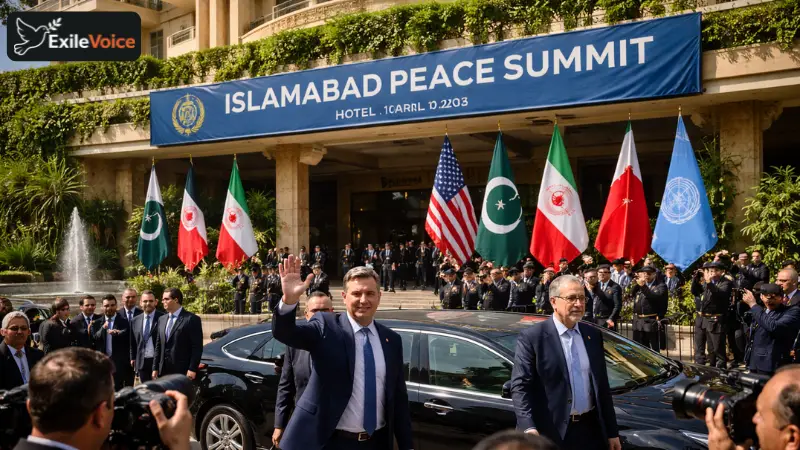
On April 10, 2026, the eyes of the global financial and political world are fixed on Islamabad. What was once considered a state on the brink of economic collapse has transformed into the primary stage for the most significant peace negotiations of the modern era. The "Islamabad Peace Summit," hosted at the Serena Hotel, represents a historic attempt to resolve the 40-day conflict between the United States and Iran, a conflict that has pushed the world to the edge of a broader regional war.
The atmosphere in the Pakistani capital is one of cautious optimism. High-level delegations, including U.S. Vice President JD Vance and senior Iranian officials, have converged to discuss a comprehensive framework for de-escalation. International financial powerhouses like Bloomberg have shifted their focus to Pakistan, recognizing that the outcome of these talks is now the single most influential factor in global market stability. For the first time in years, Pakistan is not in the headlines for its internal political strife or judicial crises, but as the "eye of the storm" for international peace.
The strategic importance of this summit cannot be overstated. According to veteran analysts and reports from major outlets like the Wall Street Journal, the Trump administration is navigating a complex exit strategy. Conservative voices in the U.S. media have already begun labeling the cessation of hostilities as a "premature" end to a war that Washington failed to win decisively. However, for President Trump, the Islamabad talks represent a fulfillment of his promise to end "forever wars," even if the path to peace requires significant concessions.
Pakistan’s role as the host and mediator has restored its standing as a pivotal regional player. By providing a neutral ground where two of the world’s most bitter rivals can meet, Islamabad has demonstrated a level of diplomatic sophistication that many thought had been lost to years of domestic instability. As markets open across the globe, the "Islamabad factor" is being calculated into every trade, highlighting how inextricably linked Pakistan’s diplomatic success is to global economic recovery. While the situation remains fragile, the mere existence of these talks suggests a fundamental shift in the Middle Eastern power dynamic, with Pakistan at the helm of the resolution.