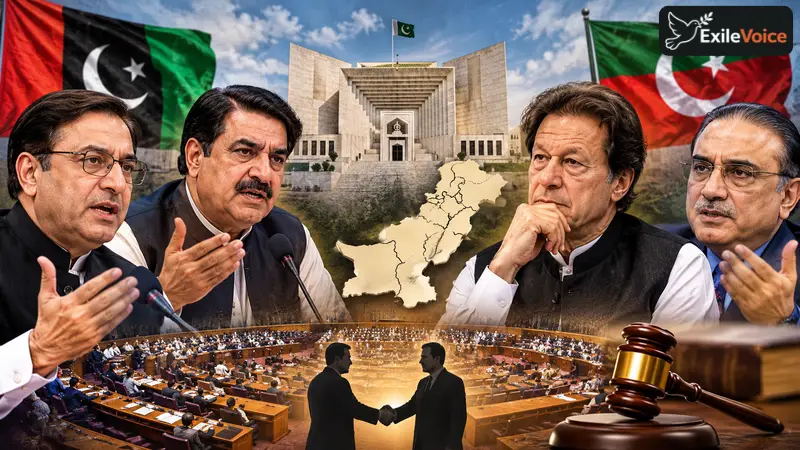

Pakistan's political landscape is experiencing heightened strain across three interconnected fronts: public friction within the ruling coalition, debates over bureaucratic representation across provinces, and deepening unrest in regions such as Azad Kashmir and Balochistan. Together, these developments point to structural pressures on institutional credibility, center-province trust, and political stability.
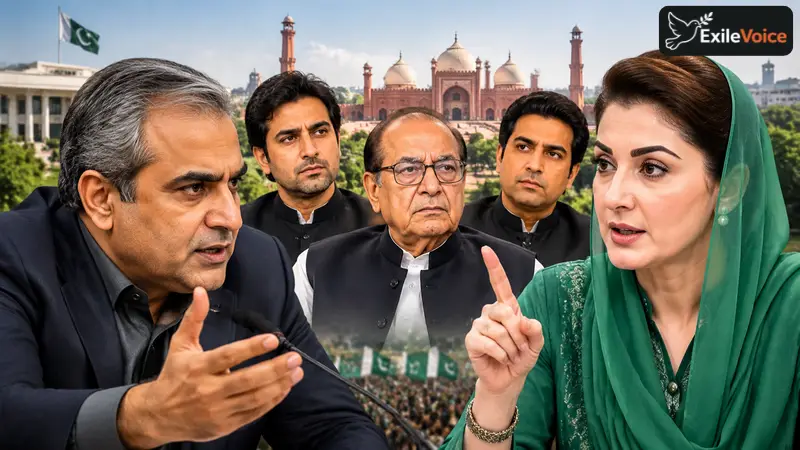
Within the political establishment, public exchanges between senior figures have exposed underlying friction rather than seamless coordination. Comments attributed to Mohsin Naqvi regarding recurring criticism drew sharp responses from Pakistan Muslim League-Nawaz (PML-N) figures, including Rana Sanaullah, who argued that systemic breakdown was engineered through political and institutional compromises rather than occurring naturally. At the same time, other coalition voices, such as Khawaja Asif, opted for caution when pressed on confrontational remarks, illustrating differing tactical calculations within the government camp. Commentary from analysts such as Najam Sethi further suggests that coalition parties are navigating delicate positioning between the Pakistan Peoples Party (PPP), the PML-N, and the establishment on provincial and governance questions.
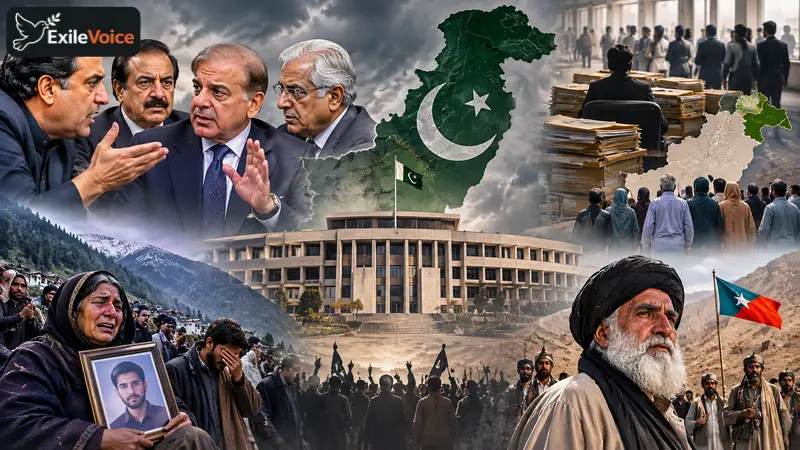
Questions of institutional balance also extend into civil administration and recruitment. Reporting highlighted by Shahbaz Rana on Grade 22 bureaucracy indicates that two out of every three top-tier bureaucrats come from Punjab, a statistic that fuels perceptions of regional imbalance even when population shares are taken into account. Alongside these debates are discussions around public perception of state institutions, recruitment outreach, and how economic hardship shapes citizen attitudes toward public life.
Most concerning for long-term national cohesion are signals of alienation and grief in peripheral regions. Sharp contrasts have been drawn between festive urban events and concerts in Islamabad at a time of widespread economic distress and tragic loss in Azad Kashmir, where a young man named Ehtesham was killed. Simultaneously, statements from Balochistan leader Sardar Akhtar Mengal arguing that Balochistan and Pakistan can no longer remain together, followed by media reports claiming he left or went into hiding with his son, underscore severe political alienation in Balochistan.
For policymakers and political observers, the convergence of coalition friction, perceived bureaucratic concentration, and regional grievances presents a critical test. Addressing these pressures requires credible institutional rules, equitable representation across provinces, and genuine political engagement with aggrieved communities in both Kashmir and Balochistan.