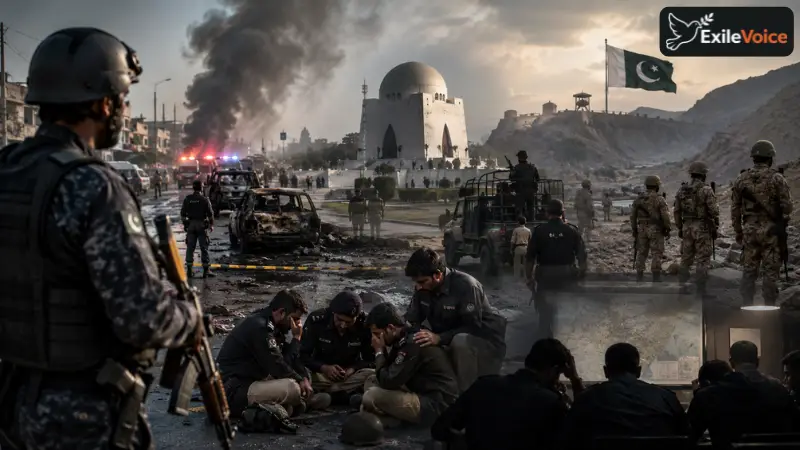
Pakistan is currently grappling with a severe deterioration in its internal security landscape, underscored by a series of complex attacks that have exposed critical vulnerabilities in the state’s response mechanisms. Recent incidents, including a high-profile attack in Karachi and a deadly event in Ziarat, the final resting place of Quaid-e-Azam Muhammad Ali Jinnah, highlight a breakdown in the coordination between law enforcement, paramilitary forces, and the state.
The situation in Ziarat, where nine police personnel lost their lives after being left without adequate support, ammunition, or reinforcements during a prolonged encounter, serves as a grim case study of institutional failure. Reports indicate that local authorities and police were abandoned while performing duties in high-risk areas, despite desperate pleas for assistance. This incident has sparked intense public frustration, particularly regarding the perceived lack of accountability and the inadequacy of the state's security apparatus to protect its own officers.
The hierarchical confusion regarding the operational command of paramilitary organizations, such as the Frontier Corps (FC) and the Rangers, further exacerbates the crisis. While these forces operate under federal authority, there is a clear disconnect between the political leadership's rhetoric regarding a "zero-tolerance" policy against terrorism and the reality on the ground, where intelligence and response failures continue to persist . The ongoing exploitation of border regions by militant entities, often exacerbated by a lack of central government oversight, creates a vacuum that jeopardizes national stability. Addressing these systemic challenges requires more than strong rhetoric; it demands a fundamental restructuring of intelligence accountability, logistical support for front-line personnel, and a transparent commitment to governance that prioritizes the lives and safety of citizens over political maneuvering.