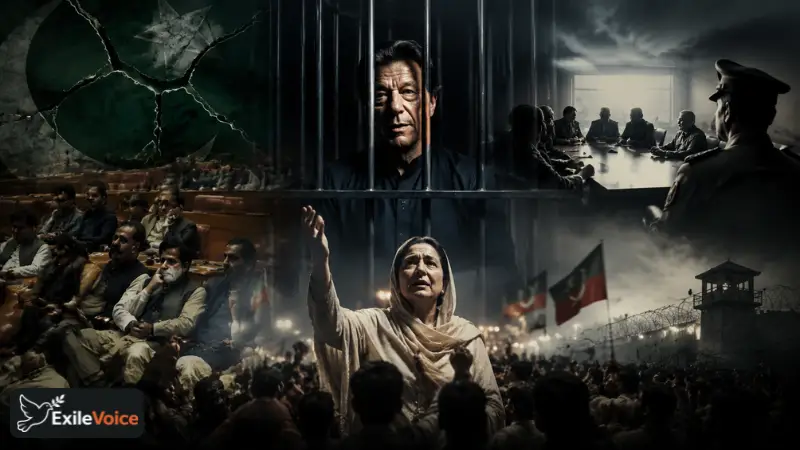
The political landscape in Pakistan has reached a crossroads, characterized by a visible disconnect between the leadership of Pakistan Tehreek-e-Insaf (PTI) and its legislative body. A recent protest outside Adiala Jail, spearheaded by Aleema Khan, served as a sobering barometer for the current state of the movement. Despite repeated appeals for Members of the National Assembly (MNAs) and Senators to show solidarity with the incarcerated Imran Khan, the turnout was described as lackluster and disappointing. This event raises critical questions about the stamina of the resistance and the unity of the party's elected representatives.
Aleema Khan’s frustrations highlight a deepening concern regarding the transparency of the state's handling of Imran Khan’s health. Reports of medical issues, including a blood clot, have become a focal point for the party's base, yet the legislative response has been perceived as sluggish. The absence of high-profile leaders, such as the Chief Minister of Khyber Pakhtunkhwa, at crucial moments of protest suggests a tactical divergence within the party. Some analysts argue that this is a symptom of "protest fatigue," while others point to a more calculated hesitation among lawmakers who may be seeking back-door settlements with the military establishment.
The internal narrative within PTI is currently split. One faction remains committed to public agitation and international advocacy, while another believes that aggressive rhetoric, particularly from overseas supporters, has hampered potential "deals" with the establishment. This friction is compounded by the lack of a cohesive framework for action. While alliances like the Tehreek-e-Tahafuz-e-Aaeen-e-Pakistan exist, their strategic output remains ambiguous. The movement lacks a unified command that can translate public sentiment into effective political pressure without alienating the very institutions it seeks to negotiate with.
To navigate this impasse, the PTI leadership must reconcile its internal differences and adopt a more disciplined approach to advocacy. The role of figures like Mahmood Khan Achakzai is pivotal; as a veteran politician, his responsibility is to bridge the gap between the various factions of the opposition and the Khan family. Without a clear, documented strategy that moves beyond weekly protests, the movement risks becoming marginalized. The current "wait and watch" policy from the military establishment, coupled with the apparent indifference of many elected officials, suggests that the traditional methods of Pakistani political pressure may no longer be sufficient in the face of a consolidated hybrid regime.