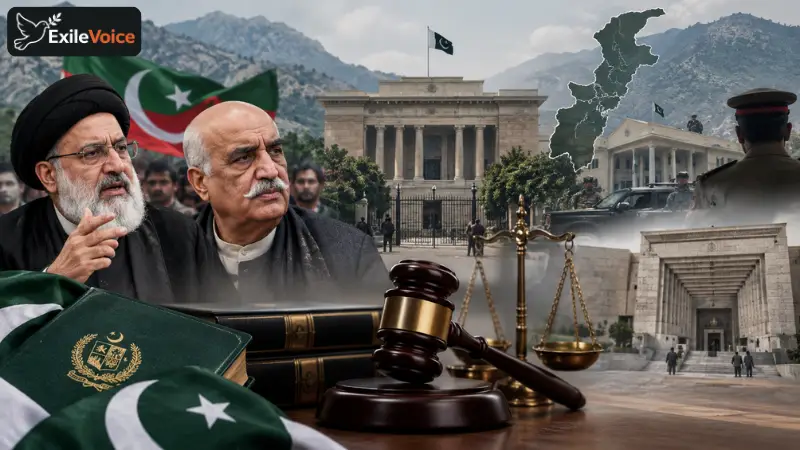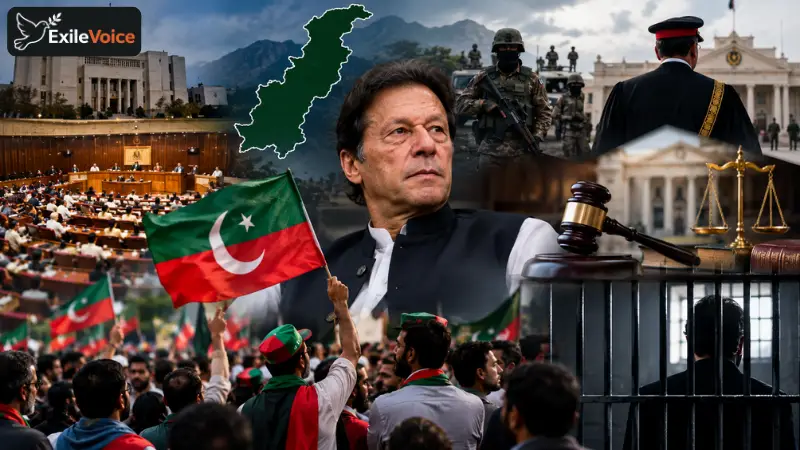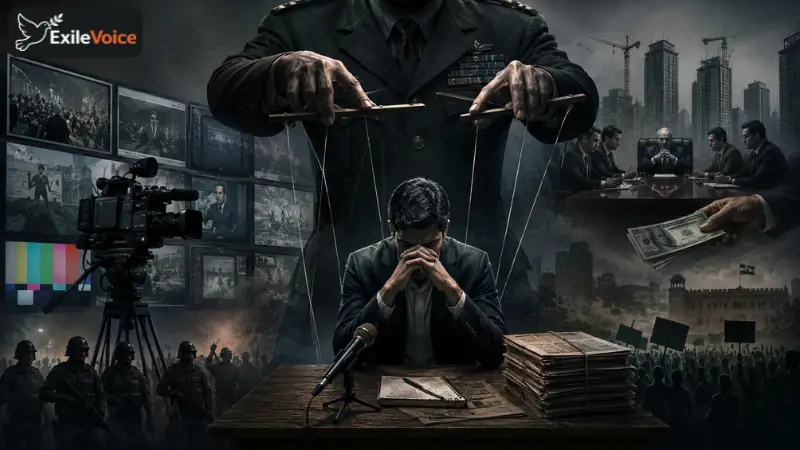
The state of press freedom in Pakistan has rapidly deteriorated into an existential crisis for independent journalism, characterized by systematic censorship, judicial weaponization, and institutional coercion. The operational landscape for media professionals is no longer governed by market dynamics or editorial principles, but rather by the dictates of a highly intrusive state security apparatus. Recent public disputes between veteran political commentators and broadcast journalists provide a revealing window into the covert operational architecture utilized by the state to shape public opinion and purge dissenting voices from the national discourse.
A recent high-profile digital confrontation between two of Pakistan’s most seasoned political journalists encapsulates the profound complexity of media manipulation in a hybrid democracy. The dispute centered on allegations regarding the sudden and unceremonious termination of a prime-time anchor during a previous political administration. While one party attributed the termination directly to executive orders issued by the Prime Minister's Office, counter-narratives and internal institutional insights revealed a far more complex reality. The documentation and inside testimonies indicate that executive political leadership was completely bypassed. Instead, the termination was orchestrated through a combination of direct pressure from intelligence quarters and corporate collusion by media owners seeking to protect their broader commercial and regulatory interests.
The operational mechanics of this censorship model rely heavily on the structural vulnerability of media house owners. In Pakistan, major television networks and print publications rarely operate purely as independent journalistic entities; they are frequently embedded within larger corporate conglomerates with extensive commercial interests spanning real estate, manufacturing, and state contracts. This structural integration makes them exceptionally vulnerable to regulatory coercion. When a particular journalist or news program crosses red lines established by the security apparatus, the state rarely utilizes formal legal channels to enforce compliance. Instead, it deploys asymmetric financial pressures, including the arbitrary suspension of state-sponsored advertisements, tax audits, and regulatory bottlenecks targeted at the parent corporation.
Faced with catastrophic commercial losses, media owners actively collude with state actors to eliminate problematic journalists. To insulate both themselves and the state from charges of active censorship, these corporate entities typically manufacture alternative pretexts for termination. Journalists are frequently dismissed under the guise of declining viewership ratings, shifting target demographics, or sudden financial restructuring within the network. In more insidious cases, media owners explicitly misinform the terminated professionals, falsely blaming civilian political leaders for the dismissal. This dual-purpose strategy successfully removes the critical voice from the airwaves while simultaneously redirecting public and professional anger toward civilian political entities, thereby preserving the structural anonymity of the military establishment.
This contemporary framework of narrative control is not an anomaly, but rather the modernization of a historical doctrine aimed at shielding institutional actors from public accountability. The historical precedent for suppressing vital national truths is deeply embedded in the state's post-colonial governance model. A definitive example of this structural amnesia is the institutional handling of the Hamoodur Rahman Commission Report, commissioned to investigate the catastrophic military and political failures of the 1971 secession of East Pakistan. Despite the commission's exhaustive documentation of systemic institutional failures, the report was aggressively suppressed and hidden from public view for decades.
The strategic rationale behind the historical suppression of the 1971 report is identical to the logic governing the modern blackouts of contemporary political events, including regional unrest and human rights violations in peripheral provinces. By locking away historical truths, the establishment successfully prevented the institutionalization of critical lessons, enabling the repetition of disastrous governance paradigms. When state institutions prioritize the preservation of their institutional image over objective truth, the national media is reduced to an instrument of state propaganda. Breaking this cycle requires a fundamental structural overhaul, including the implementation of robust legal protections for whistleblowers, the financial decoupling of state advertisements from editorial content, and a collective commitment within the journalistic fraternity to resist corporate and institutional co-optation.