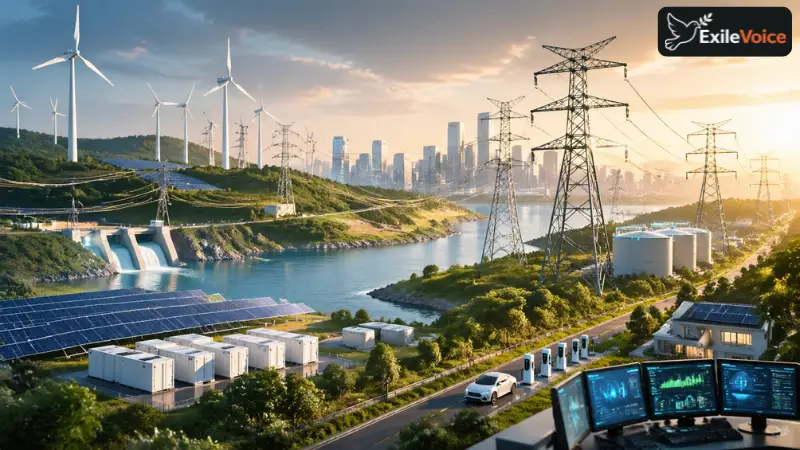
The transition to a sustainable energy future is often framed as a race to install more solar panels and wind turbines. While generation capacity is vital, the true bottleneck of the green revolution is infrastructure. Without a massive overhaul of global power grids, the clean energy generated in remote areas will never reach the urban centers that need it. The next decade will be defined not by how much energy we can produce, but by how effectively we can transport, store, and manage it through modernized infrastructure.
Investment in high-voltage transmission lines is the first priority. Many of the world's most productive renewable energy sites, such as offshore wind farms or vast desert solar arrays, are located far from major population centers. Current grid systems were designed for centralized fossil fuel plants and are often incapable of handling the bi-directional, variable flows of renewable electricity. Modernizing these "energy highways" requires significant capital and international cooperation, particularly for cross-border interconnectors that allow countries to share surplus renewable energy, thereby smoothing out localized supply gaps.
Beyond transmission, energy storage technology represents the second pillar of the infrastructure puzzle. As we move away from fossil-fuel-burning plants that can be ramped up or down on demand, we must develop the capacity to store excess renewable energy for use during periods of low production. While lithium-ion batteries are excellent for short-duration storage, long-duration solutions like pumped hydro, compressed air, and advanced thermal storage are necessary to ensure seasonal reliability. These technologies act as a massive "buffer" for the global economy, preventing blackouts and price spikes when the sun doesn't shine or the wind doesn't blow.
Finally, the digitization of the grid, often referred to as the "Smart Grid", is essential for managing a complex, decentralized energy ecosystem. AI-driven management systems can predict demand patterns and automatically adjust the flow of electricity, integrating millions of electric vehicle chargers and home battery systems into a cohesive whole. This level of sophistication transforms the grid from a passive pipe into an active, intelligent network. For investors and governments, the message is clear: the path to net-zero is paved with copper, fiber optics, and massive steel reinforcements.