

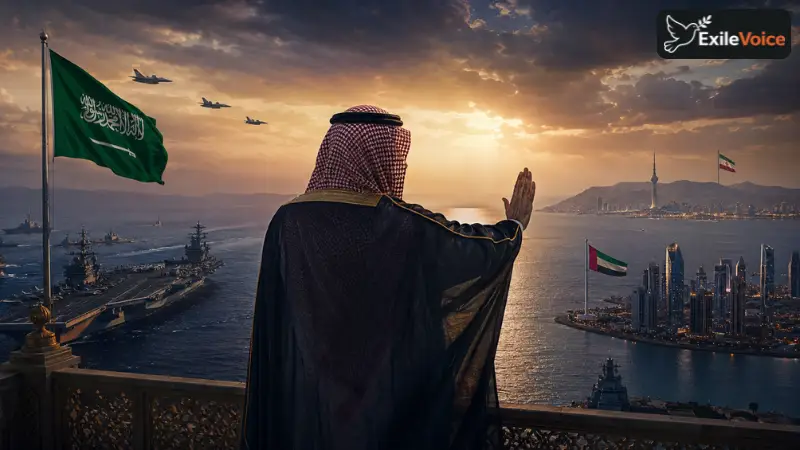
The Middle East is currently witnessing a sophisticated recalibration of power dynamics, most notably between the United States and Saudi Arabia. Recent reports, corroborated by high-level diplomatic leaks and leading international publications, reveal that the Trump administration’s "Operation Freedom", a proposed military escort and enforcement operation in the Persian Gulf, hit a significant roadblock due to a firm stance taken by Riyadh.
Initially, historical patterns suggested that Saudi Arabia would be a silent or active partner in any American maneuver to squeeze the Iranian regime. However, Crown Prince Mohammed bin Salman (MBS) has demonstrated a pivotal shift in strategic calculus. According to emerging reports, Saudi Arabia explicitly denied the United States the use of its airspace, land, and naval bases for the specific purpose of "Project Freedom." While logistical cooperation for general regional stability remains, the refusal to back a direct escalatory offensive represents a watershed moment in the US-Saudi relationship.
This shift is not merely a tactical disagreement but a reflection of a long-term strategic realization within the Saudi leadership. Analysts suggest that MBS and his advisors have concluded that regardless of the intensity of American strikes, the Iranian regime is unlikely to collapse. Consequently, Saudi Arabia is increasingly prioritizing a diplomatic track, often mediated through regional partners like Pakistan, to ensure a manageable coexistence with Tehran. This pragmatism serves Saudi Arabia’s "Vision 2030" goals, which require regional stability to attract foreign investment, a goal that would be jeopardized by an all-out regional war.
Furthermore, the friction highlights a growing rift between Saudi Arabia and the United Arab Emirates (UAE). While the UAE has positioned itself as a frontline state in the confrontation with Iran, Saudi Arabia appears more cautious. This divergence is compounded by economic competition, as Riyadh aggressively maneuvers to replace Dubai as the region’s primary commercial and financial hub. The refusal to grant military access for "Operation Freedom" is, therefore, as much about asserting Saudi sovereignty as it is about managing the risks of a conflict that no longer serves Riyadh's national interests.

