The tragic death of ten-year-old Hania Adeel, an Australian-Pakistani child killed in Chakwal, has ignited a fierce debate regarding justice, accountability, and the integrity of law enforcement in Pakistan. While initial reports suggested a single perpetrator within the Counter Terrorism Department (CTD), the emergence of a disturbing post-mortem report has shattered this narrative, revealing a reality far more complex and violent than initially acknowledged.
According to the forensic findings, the child's body sustained at least 11 bullet wounds, with trajectory analysis indicating shots were fired from multiple directions. This detail fundamentally contradicts the official narrative of a 'judgment error' or a single rogue operative. Instead, it suggests a coordinated action involving multiple armed personnel. The sheer brutality, evidenced by the multiple entry points of the gunfire, raises serious questions about the professional conduct, Rules of Engagement, and the chain of command within the department involved.
The incident has drawn international attention, with the Australian Prime Minister urging Pakistan to conduct a transparent and comprehensive investigation. Yet, the local response has been marred by what critics describe as institutional dishonesty. Rather than an immediate, transparent accounting, officials were seen engaging in performative gestures, such as visiting the family home, while the core facts, the number of shooters and the specific circumstances leading to the firing, remained obscured or miscommunicated.
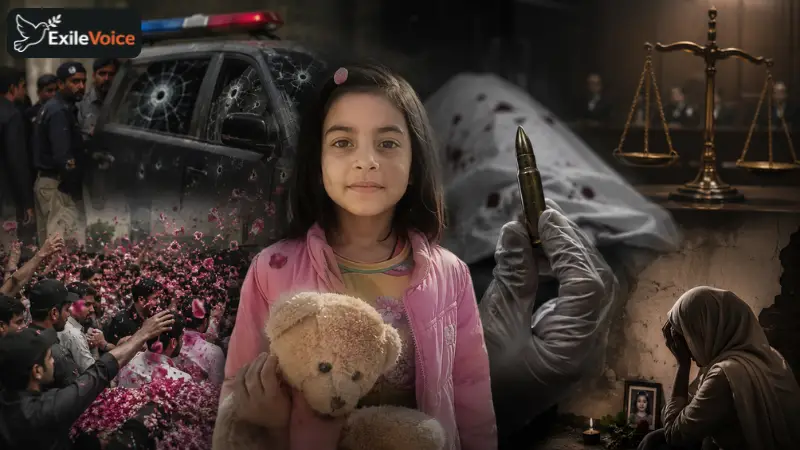
Furthermore, the public discourse surrounding this tragedy has been deeply polarized. Reports of local citizens showering the involved CTD officials with flower petals have sparked intense national outrage. This behavior is viewed by many as an indictment of the broader culture of impunity that currently permeates various levels of public life in Pakistan. Critics argue that when state institutions lose their moral authority, and when the public is conditioned to overlook systemic violence, the pursuit of justice becomes a hollow exercise.
The lack of urgency from government officials, some of whom have brushed aside inquiries regarding the case during budget-related sessions, highlights a concerning level of apathy. For the family of Hania Adeel, and for the broader Pakistani public, this case has become a focal point for a much larger struggle: the need for an independent, professional law enforcement apparatus that serves the citizen rather than acting as a law unto itself. As the investigation progresses, the demand for transparency, evidence-based accountability, and the end of 'sacrificial lamb' narratives remains the central pillar of the public outcry. The case of Hania Adeel is not merely a localized tragedy; it is a profound test of the Pakistani judicial and administrative system’s commitment to its most basic mandate: the protection of human life.