The recent incident on the Lahore Ring Road involving a fire in a high-end, bulletproof BMW used by Chief Minister Maryam Nawaz has raised serious questions regarding the maintenance and security protocols of state-owned luxury fleets. These vehicles, often sourced from federal pools and costing taxpayers millions, are designed to withstand extreme conditions. A spontaneous fire in such a sophisticated machine suggests either a catastrophic mechanical failure or a lapse in security oversight. While official reports often downplay these incidents, the visual evidence of the vehicle being engulfed in flames points to a significant failure in emergency response and fire-fighting capabilities for VIP movements.
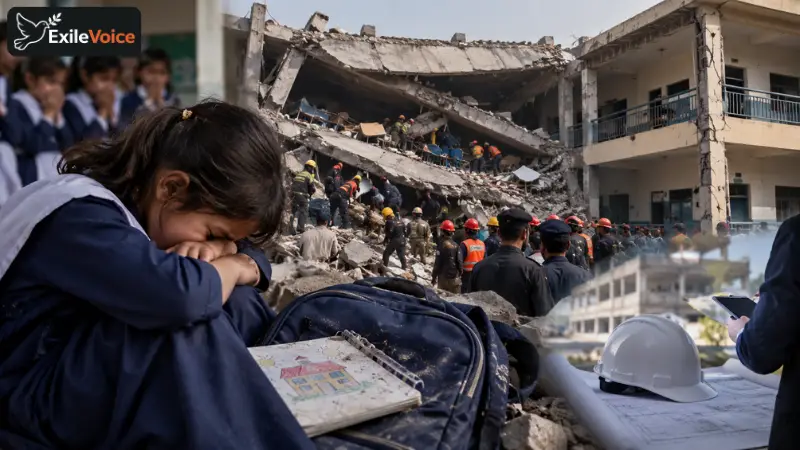
Beyond the mechanical, Punjab is undergoing a massive shift in social governance through the privatization of public schools. The third phase of this project involves handing over 2,700 schools to private contractors. While the stated goal is to improve educational standards and management efficiency, the move has sparked concerns regarding the "commodification" of education. Professional educators worry that these contracts may be awarded based on political patronage rather than pedagogical merit. If schools are managed by "contractors" with more interest in profit than literacy, the long-term impact on Pakistan's youth could be detrimental.
Simultaneously, the administrative culture in the capital is seeing a trend where compliance with the executive branch is rewarded with tangible assets. The recent allotment of a 14-marlas plot in Islamabad’s D-12 sector to a senior official, who had previously been cited for contempt of court by the judiciary, illustrates a growing divide between judicial accountability and executive reward. When officials are rewarded with real estate for actions that the courts have deemed unlawful, it undermines the rule of law and creates a "loyalty-based" bureaucracy.
These three seemingly disconnected events, the car fire, school privatization, and administrative rewards, actually paint a coherent picture of the current state of governance: a focus on optics, a shift toward private management of public goods, and the prioritization of executive loyalty over judicial standing.