

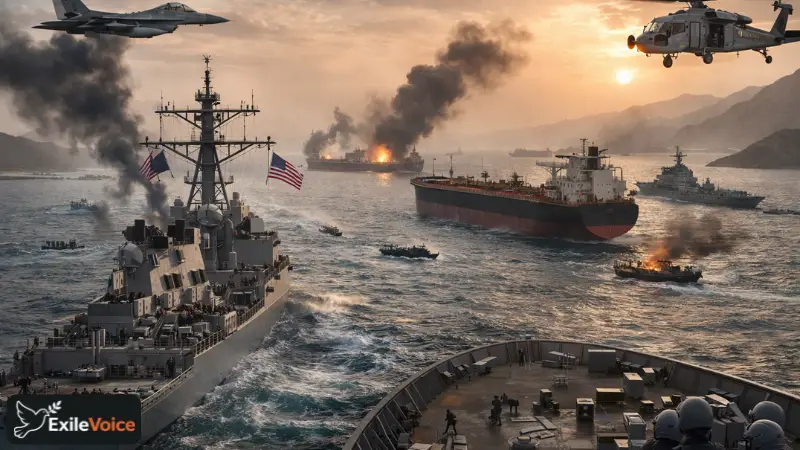
The global energy landscape is currently facing its most significant challenge in recent history as a naval blockade officially commences in the Strait of Hormuz. This development, occurring approximately 45 days into a heightened regional conflict, marks a transition from tactical skirmishes to a full-scale economic and maritime chokehold. The Strait, a vital artery through which nearly 20% of the world's petroleum flows, has historically been a flashpoint for international tensions, but the current escalation introduces a level of complexity that threatens to reshape global shipping, insurance, and freight markets permanently.
This blockade is not merely a military maneuver; it is a calculated strike against the financial lifelines of regional actors, specifically targeting oil revenues that sustain government operations and military capabilities. While a fragile ceasefire remains in place on some fronts, the initiation of "blockade diplomacy" by the United States signals a shift in strategy. Unlike historical blockades in the region, ranging from the Portuguese incursions 500 years ago to the more recent Tanker Wars of the 1980s, the current situation is defined by the unilateral and aggressive posture of the American administration.
The economic repercussions are already being felt in global markets. Oil prices have breached significant psychological barriers, surging past $90 as traders price in the risk of supply disruptions. This "inflation with a navy," as described by analysts, suggests that the cost of the conflict will not be contained within the Middle East but will be felt in every household across the globe through rising fuel costs, logistical delays, and increased insurance premiums for maritime trade.
Furthermore, the blockade has turned the Strait of Hormuz into a "permanent flashpoint," akin to the longstanding disputes in Kashmir or the divisions of the Cold War's Iron Curtain. Even if diplomatic channels, such as the 21-hour marathon negotiations recently observed in Islamabad, manage to temporarily de-escalate the situation, the fundamental security architecture of the region has been altered. The international community now faces a "threshold of pain" test: a war of attrition where the victor will be the side that can endure the greatest economic and logistical suffering over the coming months.
As the U.S. increasingly acts without the explicit support of traditional allies like Australia or the UK, who have shown hesitation to join this specific naval venture, the isolation of the American position becomes a narrative of its own. This geopolitical vacuum is being filled by regional powers and emerging markets, potentially shifting the dependency away from Western security guarantees toward a more fragmented and unpredictable maritime order.

