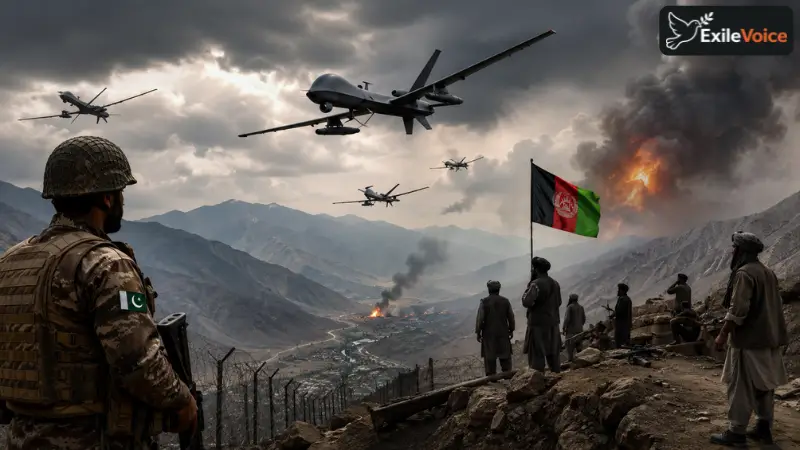
In a significant departure from previous cross-border dynamics, Afghanistan has claimed to have conducted aerial operations within Pakistani territory, specifically targeting alleged ISIS hideouts in Balochistan and Khyber Pakhtunkhwa. This development, reported by international media outlets, marks a new phase in the volatile relationship between the two nations. While the Afghan Taliban’s claim of possessing an air force is debated, the use of drones to strike targets across the border signifies a shift in tactical capabilities and regional aggression.
For years, Pakistan has conducted cross-border operations into Afghanistan, citing the need to neutralize terrorist sanctuaries. However, this is reportedly the first time Afghanistan has reciprocated with aerial strikes on Pakistani soil. The ISPR has acknowledged the presence of drones in the Balochistan region, stating that they were neutralized by Pakistani defense systems, though they dispute the claims regarding the scale and success of the Afghan strikes.
This escalation comes amidst a backdrop of long-standing accusations. Pakistan maintains that militants use Afghan territory to stage attacks, while Afghanistan counters that Pakistan has provided refuge to ISIS elements. The geopolitical ramifications are severe. As India monitors the situation, the lack of constructive engagement between Islamabad and Kabul has created a vacuum where military posturing has become the default. The porous nature of the border, coupled with the potential for further drone warfare, threatens to exacerbate local instability and complicates regional security dynamics. The failure to address these border security issues through diplomatic channels continues to leave the region vulnerable to further conflict.