

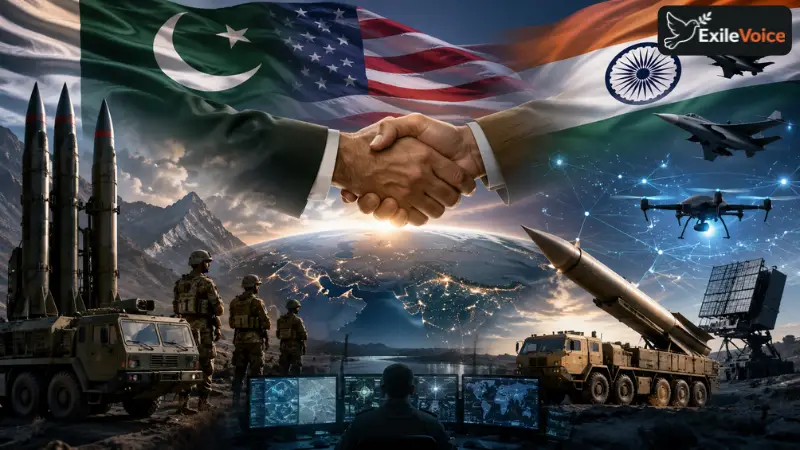
Recent strategic commentary from the US Department of Defense, particularly following the Shangri-La Dialogue in Singapore, suggests a significant shift in the trilateral relationship between the United States, Pakistan, and India. For years, the prevailing perspective within Washington favored India as the primary regional partner, often viewing Pakistan through a lens of skepticism or concern, particularly regarding its missile development and internal stability.
However, recent statements indicate an unexpected warming of relations between the US and Pakistan. This development is attributed to several factors: US recognition of Pakistan’s constructive role in Middle Eastern mediation and, significantly, a change in how the US views the security dynamic between Islamabad and New Delhi. For the first time in years, senior US defense officials have articulated that they do not view the development of missile capabilities by either Pakistan or India as inherently threatening to the United States. This marks a departure from the previous policy of imposing sanctions on entities involved in Pakistan’s strategic programs while maintaining a different standard for India.
The regional security architecture, particularly in the Asia-Pacific, is becoming increasingly complex. With the rise of artificial intelligence in military operations, the decision-making framework, often referred to as the OODA loop (Observe, Orient, Decide, Act), has undergone a radical transformation. As modern warfare relies more heavily on AI for target identification and strategic analysis, the speed and accuracy of these systems are paramount. This technological shift, combined with the proliferation of sophisticated disinformation and deep-fake technology, forces military commanders to rethink their response mechanisms.
Pakistan has responded to these changing regional realities by formalizing its own Rocket Force. This conventional force, distinct from the country’s nuclear command and control structures, represents a strategic counter to perceived Indian military doctrines. Experts note that this development is a calculated move to establish a conventional deterrent, preventing scenarios where an adversary might believe they can operate below the nuclear threshold without consequence. As Pakistan navigates these external shifts, the internal focus remains on balancing these strategic advancements with the persistent challenges of internal political and economic stability.

