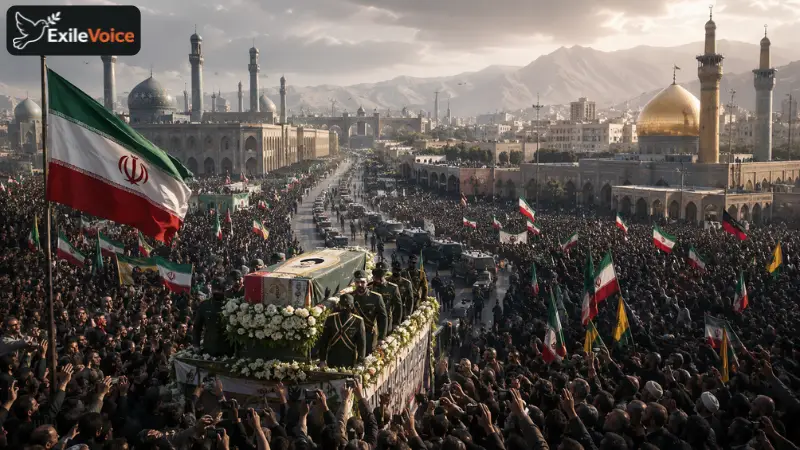
The recent funeral proceedings for Imam Ali Khamenei in Iran, which commenced on July 4, 2026, represent far more than a religious observance. While formally a period of mourning, the event is being analyzed by geopolitical experts as a sophisticated "power play" by the Iranian state to assert its influence across the Middle East.
Strategically, the timing of the funeral, which coincided with the American Independence Day, served as a deliberate diplomatic signal. The Iranian state leveraged this global moment to emphasize its resilience and its capability to mobilize millions of citizens. According to reports cited during the mourning period, transportation and government authorities estimated that nearly 7 million people participated in the funerary proceedings across various cities, a scale of mobilization rarely seen in the contemporary world.
The procession itself, traversing from Tehran to Qom, Najaf (Iraq), Karbala (Iraq), and Mashhad, serves as a symbolic regional tour that underscores Iran’s reach and influence among its regional allies. The deliberate exclusion of European leadership from the invitation list further highlights a shift in Iran's diplomatic stance. Instead, the participation of leaders and high-level representatives from nearly 100 countries reflects a calculated effort to demonstrate that Iran is not isolated on the international stage.
Furthermore, the Iranian state issued formal warnings to the United States and Israel against attempting any destabilizing actions during this period, reinforcing its narrative of strength. This event serves to solidify Iran's political significance, ensuring its visibility as a critical player in the volatile Middle Eastern political landscape.