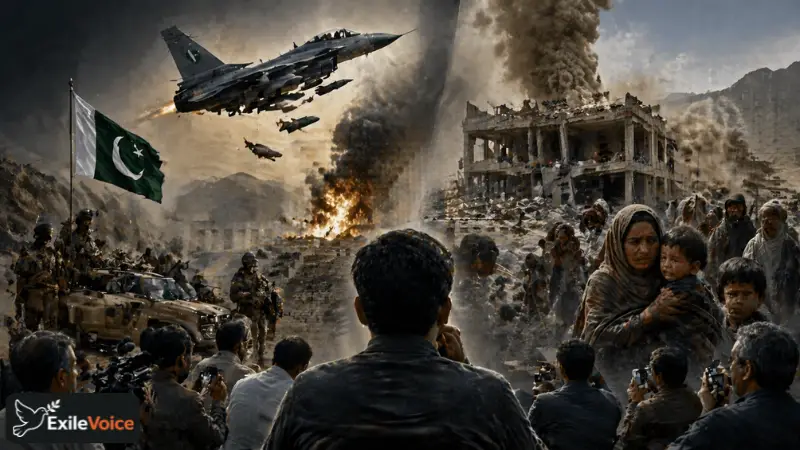
The recent escalation of hostilities between Pakistan and Afghanistan has raised significant questions regarding the moral and ethical dimensions of modern warfare. On Tuesday, April 28, 2026, Pakistani authorities officially reported a major retaliatory strike against Afghan border posts in response to what they termed "unprovoked aggression" near the Chaman border. According to official accounts, the Pakistan Air Force (PAF) was utilized to destroy ammunition dumps and several Afghan Taliban posts.
However, the use of advanced air power against an irregular force, which lacks a formal air force and modern military infrastructure, has sparked a debate within the intellectual and civil society sectors of Pakistan. Analysts argue that by utilizing an "Israeli playbook" of precise but devastating strikes on sovereign territory, Pakistan risks losing its moral high ground. The controversy was further fueled by reports from Al Jazeera and the New York Times, citing United Nations confirmations of a hit on a university in Asadabad, Kunar province. While Pakistan's Ministry of Information denied targeting educational institutions, they maintained that their operations are based on precise intelligence.
The sudden resurgence of military activity against groups like "Fitna-ul-Khawarij" (TTP) after a 60-day hiatus suggests a strategic realignment. Critics point out that during the height of the Iran-US tension, these militant groups seemed to disappear from the headlines, only to return once regional dynamics shifted. This "on-and-off" nature of domestic terrorism raises questions about the transparency of military narratives.
Furthermore, there is a growing call for Pakistan’s media and public figures to exercise more internal accountability. While the Pakistani public is quick to condemn Israeli actions in Gaza, there is a perceived silence regarding the humanitarian impact of Pakistan’s own cross-border operations. The ethical dilemma remains: can a state maintain a claim to moral superiority while employing the same tactical maneuvers it criticizes in others? Without a balanced feedback loop from civil society, the military risk alienating the very populations it seeks to protect along the border.