

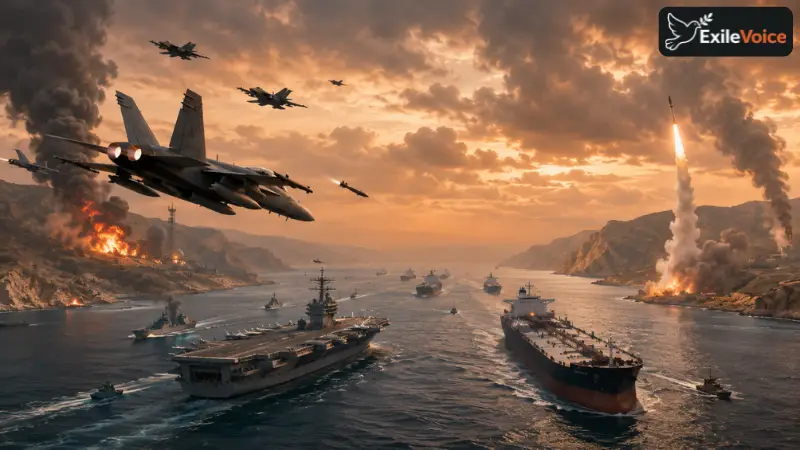
The ongoing geopolitical friction between the United States and Iran has reached a critical juncture, characterized by intense military activity surrounding the Strait of Hormuz. Following recent reports of projectile attacks on commercial oil tankers in the region, the United States Central Command (CENTCOM) initiated a substantial aerial bombing campaign targeting Iranian naval facilities, drone infrastructure, and missile installations along its southern coast. This development marks a significant shift in the strategic landscape, as both nations engage in a pattern of tit-for-tat escalations that threaten regional stability.
At the heart of this conflict lies a fundamental struggle for leverage. Iran, wary of the durability of US-led diplomatic initiatives and skeptical of promised sanctions relief, has sought to maintain its strategic influence by exerting control over the Strait of Hormuz. By insisting on mechanisms that grant it oversight of maritime traffic, Iran aims to secure vital revenue streams necessary to sustain its economy amidst persistent sanctions. From the Iranian perspective, this is not merely an ideological stance but a calculated geostrategic necessity to ensure bargaining power during future negotiations.
Conversely, the United States and its regional allies view these Iranian maneuvers as a direct threat to global energy security. The US assertion, bolstered by its recent military actions, is that Iran’s attempt to weaponize the Strait of Hormuz must be checked to prevent the degradation of its naval capabilities. However, analysts suggest that reliance on air power alone may have significant limitations. The Iranian establishment has demonstrated its capacity for response by targeting regional infrastructure and highlighting its strategic depth, which extends beyond its borders into Iraq.
As both sides remain locked in this high-stakes confrontation, the prospects for a lasting diplomatic resolution appear fragile. The US, currently frustrated by the perceived failure of existing memoranda and the shifting political winds within the Middle East, maintains a hardline stance. Meanwhile, regional actors like Pakistan and Qatar continue to act as conduits for dialogue, though the ultimate outcome depends on the direct engagement between Washington and Tehran. For now, the world watches as the critical maritime chokepoint remains a focal point of intense geopolitical maneuvering.

