The diplomatic landscape in Islamabad has taken a significant turn with the arrival of a high-level Iranian delegation, marking a critical juncture in regional mediation efforts. Led by Mohammad Bagher Ghalibaf, the Speaker of the Iranian Parliament, the delegation includes seasoned figures such as Foreign Minister Abbas Araghchi and the Governor of the Central Bank of Iran. This robust representation underscores the seriousness with which Tehran is approaching the current negotiations, aimed at resolving the escalating tensions that have gripped the Middle East.
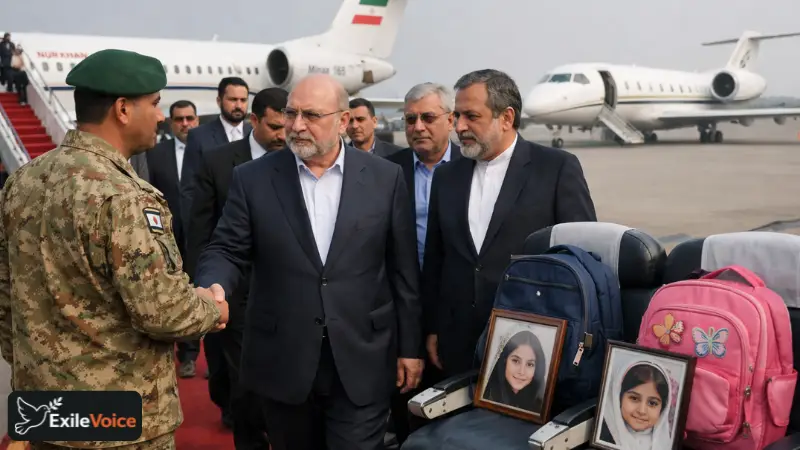
A poignant and symbolic element of this visit was the choice of flight identification. The delegation traveled under the flight number "Minab 165," a direct reference to the Minab school where 165 young girls were tragically killed in a recent strike. To further emphasize their message, the seats of the aircraft were adorned with school bags and photographs of the deceased children. This visual representation serves as a stark reminder of Iran’s grievances and the human cost of the ongoing conflict, signaling that their negotiating stance is deeply rooted in these national tragedies.
The logistical execution of the trip also revealed Iran's heightened security concerns. The delegation traveled in two separate aircraft, a strategy likely employed to mitigate the risk of a single targeted strike on their top leadership. Upon arrival at the Nur Khan Airbase, they were received by Pakistani officials, including Chief of Army Staff General Asim Munir. Observers noted that the General appeared in combat uniform, a choice that has sparked discussion regarding the symbolic messaging of military presence during a predominantly diplomatic and civilian engagement.
The stakes for these talks are exceptionally high. Iran has reportedly set forth two primary conditions for the formal commencement of negotiations: an immediate cessation of Israeli strikes on Lebanon and the unfreezing of Iranian international assets. While Pakistan has positioned itself as a mediator, the inclusion of Lebanon in the ceasefire discussions remains a point of contention and potential diplomatic friction, as conflicting reports emerge from US and Israeli quarters regarding whether Lebanon is officially part of the current draft agreement.
As US representatives, including Vice President-elect JD Vance and Jared Kushner, are expected to join the fray in Islamabad, the world watches to see if this "shuttle diplomacy" can bridge the trust deficit between Tehran and Washington. For Pakistan, successfully hosting these talks provides a moment of international prestige, yet the underlying complexities of regional alliances and the internal pressures of the military-civilian dynamic continue to cast a shadow over the proceedings.