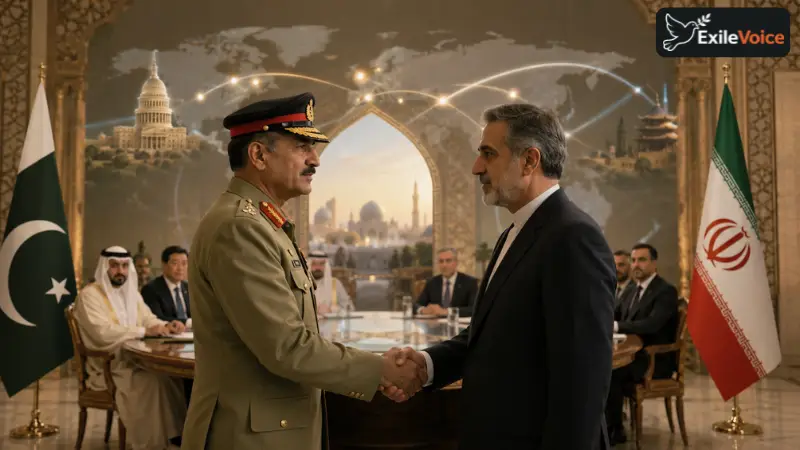
Pakistan’s strategic geopolitical value has returned to the forefront of global diplomacy as Chief of Army Staff (COAS) General Asim Munir embarks on a high-stakes diplomatic mission to Tehran. International news syndicates, including Turkish, German, Israeli, and American outlets, are tracking the movements of the Pakistani army chief with intense scrutiny. This unexpected shuttle diplomacy positions Islamabad as an active intermediary attempting to de-escalate brewing conflicts between Western powers, Israel, and the Islamic Republic of Iran.
According to global intelligence trackers, General Munir’s visit to Tehran is less about bilateral defense cooperation and more about carrying a specific "letter of intent" or a structured backchannel framework supported by Western stakeholders, including the United States. International policy journals note that the timing of this intervention is critical. Pakistan is attempting to broker a diplomatic compromise or an oversight framework that could offer a breakthrough in the regional standoff. The global financial markets and international defense analytical platforms have begun responding to these maneuvers, reflecting the high stakes associated with Islamabad's renewed regional mediation.
However, the path to peace faces structural hurdles. Just as the Pakistani mediation effort gained momentum, global news agencies broke an exclusive report regarding a major development within Iran's nuclear policy framework. Iran’s Supreme Leader Ayatollah Ali Khamenei issued a definitive decree stating that the country's stock of enriched uranium, estimated to be around 350 kilograms of highly enriched material, will remain strictly within Iranian borders. This directive stands in contrast to ongoing international backchannel proposals that suggested transferring the enriched material to a third party, such as Russia, to facilitate sanctions relief and decrease immediate conflict risks.
Simultaneously, state media within Iran has shown an increase in domestic preparedness programs, illustrating defensive firearms assembly, tactical equipment training, and civilian readiness exercises across multiple demographics. The juxtaposition of these domestic defense measures with General Munir’s arrival underscores the complexity of Pakistan's diplomatic mission. Despite these challenges, official channels indicate that the diplomatic infrastructure remains intact. The Iranian Ambassador to Pakistan recently issued a formal statement of appreciation toward Islamabad for facilitating the release of 20 Iranian sailors previously detained in Singapore, an act of goodwill designed to sustain a cooperative bilateral environment.
Geopolitical analysts observe that Pakistan is leveraging its unique structural relevance to balance asymmetrical global interests simultaneously. The state maintains active, functional diplomatic relationships with Washington, Beijing, Riyadh, and Tehran. This rare cross-cutting access allows Islamabad to position itself as an indispensable communication pipeline during global security crises. While the outcome of this specific mediation effort remains fluid, the initiative demonstrates that Pakistan’s military leadership views the country's external relevance as deeply tied to its ability to manage and defuse volatile regional flashpoints.