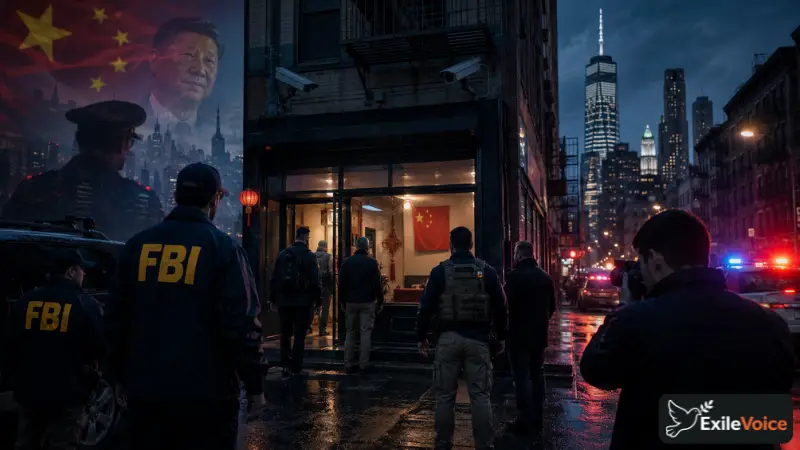
Coinciding with major diplomatic movements, a sensational legal development in New York has exposed a clandestine operation involving "secret police stations" allegedly run by the Chinese government. The FBI recently unearthered a covert system operating in the heart of Manhattan, leading to the prosecution of two individuals of Chinese descent. This case serves as a stark example of what international observers term "transnational repression", the act of a state reaching across borders to silence or monitor dissidents and critics.
The facility in question was reportedly established in 2022 under the guise of a community service center intended to assist the Chinese diaspora with administrative tasks, such as renewing driver’s licenses during the COVID-19 pandemic. However, federal investigators claim the center’s true purpose was to monitor and harass individuals critical of the Chinese regime. The FBI’s findings suggest that the station was an extension of China’s internal security apparatus, used to gather intelligence on those writing or speaking against the government from abroad.
The legal proceedings have been intense. One of the accused individuals turned state witness, confirming the existence of the covert operation. The other individual, who maintained his innocence and claimed the center was purely for community aid, was recently sentenced to 30 years in prison by a New York court. The timing of the sentencing, occurring on May 13—the same day as high-level diplomatic arrivals in China, is viewed by many as a deliberate message from the U.S. government regarding its stance on foreign interference and civil liberties.
This incident highlights a growing global concern regarding the sovereignty of nations and the protection of individuals from foreign surveillance. Similar allegations of secret police outposts have surfaced in other Western countries, prompting a broader debate on how to counter such clandestine activities without alienating diaspora communities. For those involved in activism and journalism, the New York case is a chilling reminder of the lengths to which modern regimes may go to maintain control over their narratives, even thousands of miles from their home borders.