In a scathing critique of the domestic administrative landscape, questions are being raised regarding the integrity of real estate development in Pakistan’s capital and its twin city. While high-profile projects like One Constitution Avenue often capture the headlines due to their association with the elite, a much larger and more insidious crisis is brewing: the systematic defrauding of the middle class through "file-selling" schemes.
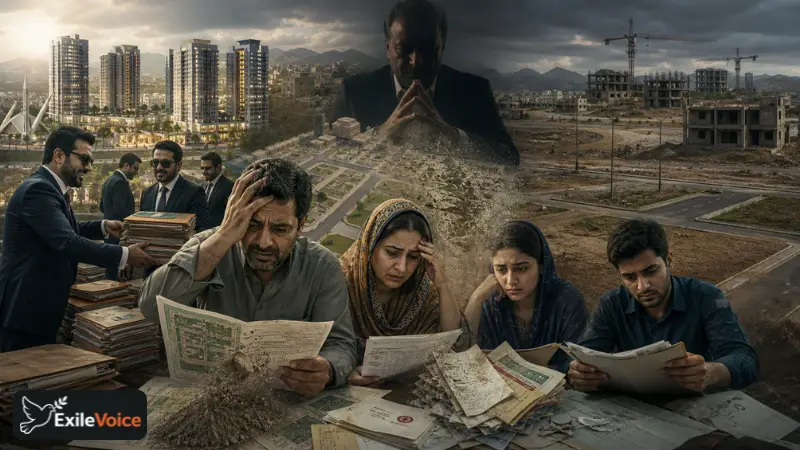
Data suggests that over the last decade, nearly 10 million real estate files have been sold in the Rawalpindi-Islamabad region, many under the guise of legitimate No Objection Certificates (NOCs). However, investigative insights reveal a shocking disparity between files sold and actual land development. For instance, Kingdom Valley reportedly sold approximately 2.5 million files despite having an NOC for only 250 kanals of land. Similarly, projects like Seven Wonder City, Nova City, and Discovery Gardens (by the Falaknaz Group) have been flagged for collecting billions of rupees from citizens while delivering nearly zero on-ground infrastructure.
The controversy has been further fueled by comments from Mohsin Naqvi, who recently emphasized that "the law should be the same for the rich and the poor." Critics, however, argue that the government’s focus remains disproportionately fixed on "crown jewel" projects where the elite reside, such as One Constitution Avenue, while the plight of the average pensioner, who may have invested their life savings into a two-marla plot that doesn't exist, is ignored.
The Falaknaz Group, once respected for its developments in Karachi, is now cited as one of the primary examples of developers who leveraged their past reputation to collect massive funds in the north before failing to deliver. As these "top five" housing societies continue to operate with varying levels of impunity, the question remains whether the Ministry of Interior and local authorities will move beyond rhetoric and provide actual relief to the millions of affected investors. The gap between the "files" sold and the "soil" available is a ticking economic time bomb for Pakistan’s urban middle class.