The Pakistani media landscape has recently been rocked by a series of controversies involving the treatment of public figures during interviews and the use of political imagery in public spaces. These incidents have sparked a national conversation about professional ethics, the boundaries of personal privacy, and the growing trend of narcissism in political branding.
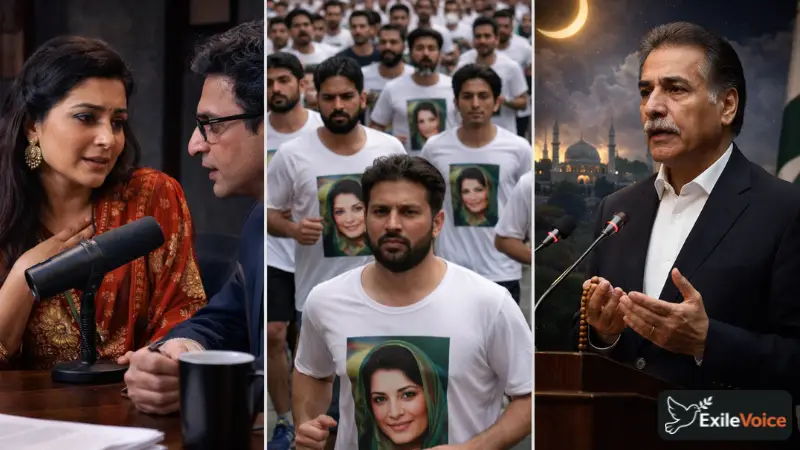
A primary flashpoint involves a recent podcast interview with film star Meera. The interview, conducted by veteran journalist Irshad Bhatti, has been widely criticized for its aggressive and deeply personal line of questioning. Observers note that the actress was subjected to inquiries about her past marriages and personal scandals in a manner that many felt was intended to humiliate rather than inform. This "journalistic encounter" has raised concerns about the decline of professional standards in the digital age, where "clicks" and "viral moments" are often prioritized over human dignity.
Critics argue that targeting vulnerable public figures for the sake of entertainment is a form of media malpractice. While celebrities often live their lives in the public eye, there is a fundamental ethical requirement for journalists to maintain a level of respect and decorum. The backlash against this interview suggests a growing public fatigue with sensationalist content that borders on harassment.
Simultaneously, a controversy has erupted in Lahore regarding a public marathon where participants were reportedly required to wear shirts featuring large images of Chief Minister Maryam Nawaz. This move has been slammed by critics as an example of extreme political narcissism. Beyond the political optics, there are concerns about the cultural and gender-based sensitivities of placing a woman’s image on the clothing of thousands of unrelated men, where the image could be subject to unintentional disrespect during a physical activity like a race.
These incidents, though seemingly unrelated, point to a common theme: the erosion of boundaries in the public sphere. Whether it is a journalist overstepping personal boundaries for a viral clip or a political leader using public events for personal branding, the result is a cheapening of public discourse.
Furthermore, the discourse has taken a bizarre turn with senior political figures like Sardar Ayaz Sadiq attributing political appointments and military titles directly to divine intervention. Critics argue that using religion to shield political decisions from scrutiny is a dangerous precedent that discourages accountability and rational debate. If every success is "God's will," then by extension, any critique of the government becomes a critique of the divine, a logic that is fundamentally at odds with democratic principles.
As Pakistan moves forward, the need for a robust ethical framework for both media and political actors is more evident than ever. Professionalism must be restored to the interview chair, and public service must be decoupled from the cult of personality.