The fragile security situation in the Middle East reached a new inflection point following the sudden rupture of a long-standing ceasefire, leading to direct military confrontations. The latest developments center on a sharp escalation involving Iran and targets within Kuwait, following a period of relative, albeit strained, quiet.
The catalyst for this renewed tension appears to be linked to broader regional conflicts involving tankers and blockades. Reports indicate that an Iranian oil tanker was struck by precision weaponry, an act that triggered a severe retaliation. The subsequent breakdown of the ceasefire was accompanied by assertive rhetoric from Iranian officials, who indicated that the time for dialogue had reached its limit, signaling a move toward direct confrontation.
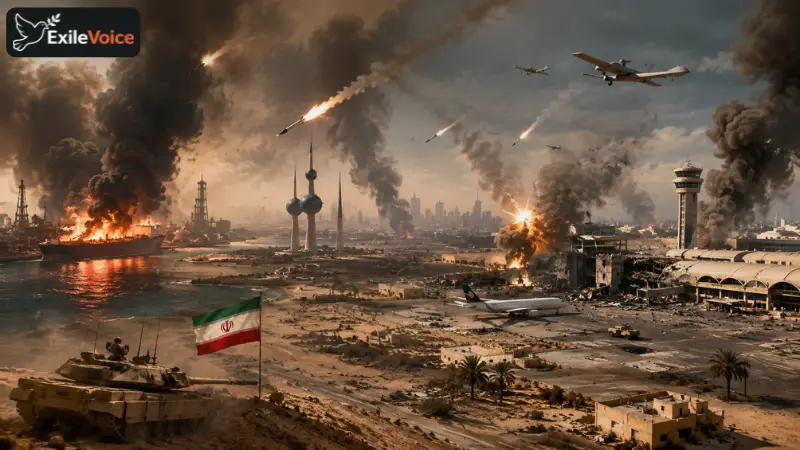
In the ensuing military actions, the impact on critical infrastructure, specifically airport facilities, has been substantial, with claims of dozens of missiles and unmanned aerial vehicles (UAVs) being utilized in the engagement. While international actors, including the United States, have maintained a calibrated, low-profile response, the satellite imagery and reports from the ground paint a picture of significant material damage.
The lack of active de-escalation from key power brokers, including the United States, and the strategic silence from Iranian leadership in the immediate aftermath, suggests that all parties are currently in a state of high-stakes recalibration. Former political figures and current regional leaders are navigating this crisis with a mix of tactical ambiguity and public posturing, even as internal dissent among populations in the West regarding the ongoing regional military involvement continues to grow.
This escalation is not an isolated event but a symptom of a deeply entrenched, multi-actor conflict that involves complex maritime security issues, energy corridor protection, and shifting alliances. As the situation remains fluid, the core question remains: will the region descend into a cycle of direct, large-scale confrontation, or will the current "tactical disagreements" allow for a path back to a diplomatic framework? For now, the region stands at a dangerous crossroads where every military maneuver carries the weight of a potential wider conflict.