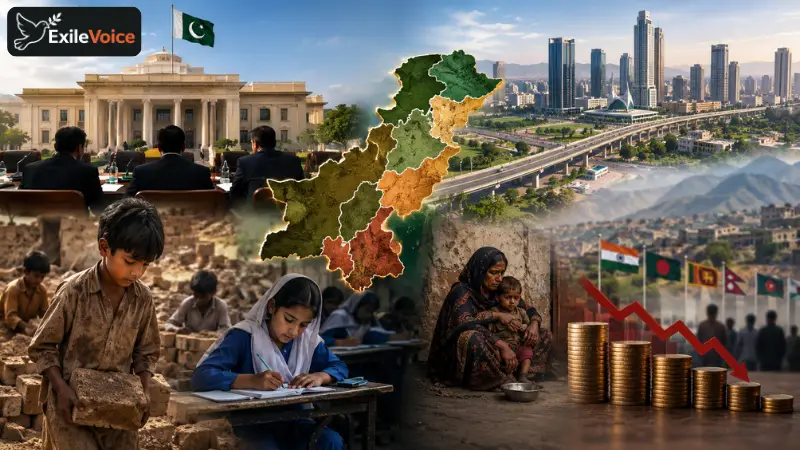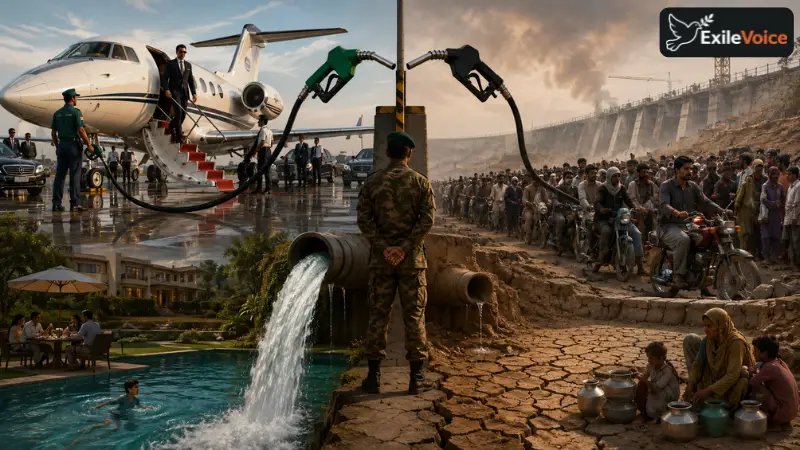
The economic divide in Pakistan is nowhere more visible than in its policies regarding essential resources and infrastructure, where the burden of cost often falls heavily on the average citizen while the elite enjoy significant subsidies and benefits.
A primary example of this disparity is the current pricing structure of fuel. Recent data indicates that jet fuel, used primarily by the elite and for commercial aviation, is priced at 251 rupees per liter. In contrast, standard motor fuel for motorcycles, the primary mode of transportation for the working class, sits at 311 rupees per liter. This 60-rupee gap highlights a systemic issue where the costs of essential goods are inversely proportional to the user's economic standing, reinforcing the perception that policies are designed to cater to the elite class.
This trend extends to long-term national resource management, particularly in the water sector. Recent briefings regarding the lack of dam construction in Pakistan, notably failing to keep pace with global developments like those in India, reveal a persistent lack of accountability. Critics point out that despite decades of military control over institutions like WAPDA (Water and Power Development Authority), the country faces acute water scarcity and security risks.
The concern is not just the lack of infrastructure, but the pattern of passing the buck. When leaders from the military-led management of WAPDA highlight the "need for serious efforts," it raises questions about the preceding five decades of oversight. By shifting blame for administrative failures onto civilian governments or political figures, the establishment avoids introspection regarding its own long-term control over these vital sectors. These instances of inequitable pricing and questionable resource management reflect a broader structural inequality that continues to hinder Pakistan’s socio-economic progress.