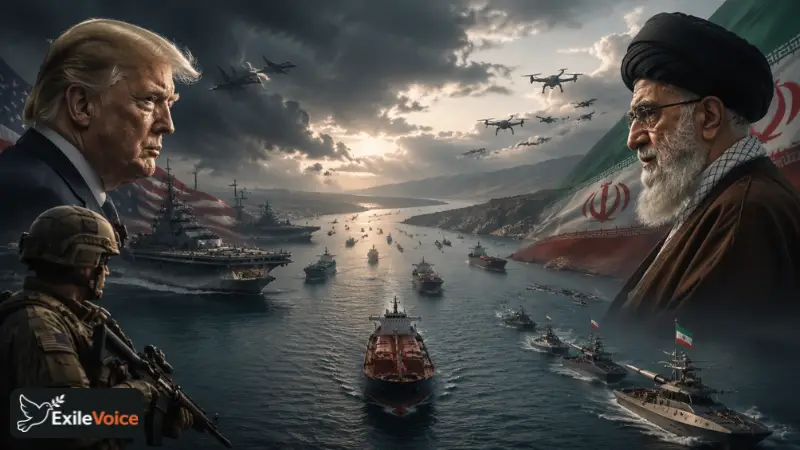
In the early days of May 2026, the global maritime landscape remains gripped by a tense standoff in the Strait of Hormuz. Despite the bold proclamations from Washington regarding "Operation Freedom," a critical analysis of the ground reality suggests that the project is facing significant hurdles. U.S. Secretary of Defense Pete Hegseth recently declared the operation a resounding success, claiming total control over the vital shipping lane. However, tracking data paints a starkly different picture. In a forty-eight-hour window, only two commercial vessels, the Alliance Fairfax and the CS Anthem, successfully transited the strait under the U.S. "digital umbrella."
This digital umbrella, a sophisticated military coordination framework, was intended to provide safe passage for hundreds of waiting ships. Yet, the presence of over 850 vessels anchored north of the strait indicates a profound lack of confidence in this security guarantee. The maritime industry, ever sensitive to risk, appears unconvinced by the promise of protection backed by 15,000 combat troops and a fleet of drones. The stalemate highlights a fundamental disconnect between political rhetoric in the Oval Office and the practical realities of naval warfare and insurance liability in contested waters.
Simultaneously, the Islamic Revolutionary Guard Corps (IRGC) has seized the initiative by establishing a competing regulatory framework. Tehran’s announcement of the "Persian Gulf States Authority" aims to formalize a permit system for all transiting traffic. By requiring vessels to register via a centralized email system and follow Iranian guidance, Tehran is effectively asserting its own "digital sovereignty" over the waterway. While the United States dismisses Iranian claims of firing upon American vessels as minor incidents, the psychological effect of these skirmishes has been enough to freeze global trade in the region.
The implications of this failure extend beyond maritime logistics. As the Trump administration struggles to demonstrate the efficacy of Operation Freedom, the center of gravity is visibly shifting toward Beijing. The arrival of the Iranian Foreign Minister in China to meet with Wang Yi suggests that the eventual resolution of this crisis may not be authored in Washington, but in the halls of Chinese power. If the United States cannot guarantee freedom of navigation through its own military might, it inadvertently cedes its role as the global security guarantor to China, marking a decisive moment in the realignment of the 21st-century global balance of power.