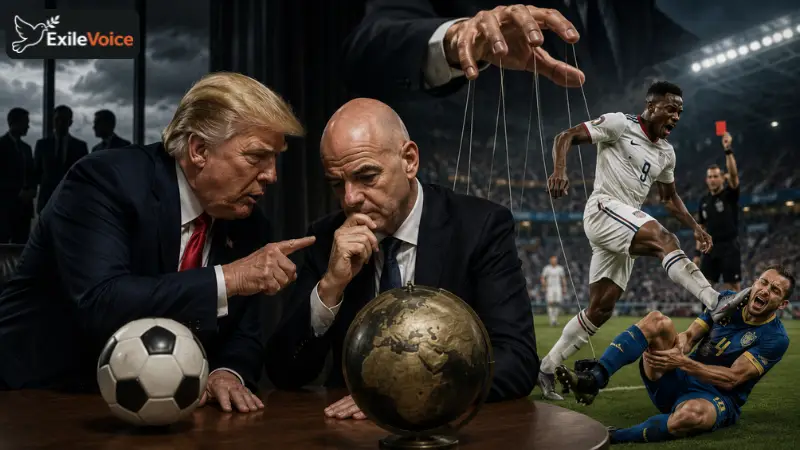
The recent decision by FIFA to suspend a red card issued to an American soccer player, Florian Balogun, has sparked global outcry and accusations of political interference in international sports. The incident occurred during a match against Bosnia, where Balogun was penalized with a red card for intentionally injuring an opponent’s ankle. Under standard FIFA regulations, a red card not only ejects a player from the current match but also prohibits them from participating in the subsequent international fixture.
Reports have surfaced suggesting that former U.S. President Donald Trump intervened directly, contacting FIFA Chief Gianni Infantino to request that the red card be rescinded. The assertion is that Mr. Trump, upon learning of the situation, dismissed the red card as an unnecessary impediment to the game. This intervention has been criticized as a violation of the "fair play" principles that have governed FIFA for 96 years.
Beyond the sporting implications, the discourse has highlighted broader concerns regarding lobbying efforts. News outlets, including Politico, have reported that the U.S. Commerce Secretary and other administration officials were involved in lobbying FIFA to facilitate this outcome. The situation is further complicated by allegations that Mr. Trump’s remarks regarding the FIFA Chief’s financial investments in the stock market were intended to exert additional pressure. For many, this event represents a troubling shift where political power is utilized to manipulate international regulatory bodies, setting a precedent that undermines the integrity of sporting competitions.