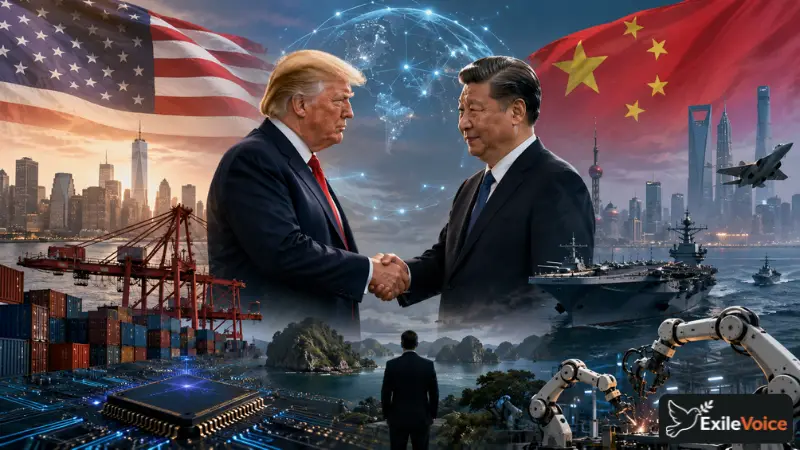
The recent three-day visit of former U.S. President Donald Trump to China has sent ripples across the global geopolitical and economic landscape. While characterized as a diplomatic mission, the visit carries profound implications for the global economy, particularly in the sectors of technology and manufacturing. The interdependence of the world’s two largest economies, the United States and China, is at a critical juncture, with both nations locked in a complex rivalry that blends military posturing with intense economic competition.
Central to the discussions are trade relations and the future of the technology economy, specifically Artificial Intelligence (AI) and semiconductor manufacturing. Major American corporations, including Amazon and Apple, remain heavily dependent on Chinese manufacturing hubs. Conversely, Chinese firms rely significantly on access to the American consumer market. This mutual dependency, however, is strained by a history of aggressive tariff policies. Observers note that while Trump previously utilized tariffs to bring China to the negotiating table, the strategy yielded mixed results, leading to a more cautious and respectful diplomatic tone in recent engagements.
The delegation accompanying Trump includes high-profile business leaders and CEOs from influential tech companies like Micron, Nvidia, and representatives associated with Elon Musk’s ventures. These industry giants are seeking relief from various trade restrictions, including bans on supplying advanced AI chips to China and limitations on importing Chinese-made components into the U.S. The economic stakes are exceptionally high, as these decisions will dictate the pace of AI development and the stability of global tech supply chains.
Beyond economics, the visit navigates the treacherous waters of regional security, particularly the Taiwan Strait and the South China Sea. China views Taiwan as an integral part of its territory, while the U.S. maintains a policy of supporting Taiwan’s independence and providing military aid. Additionally, the presence of the U.S. Navy in the South China Sea remains a point of contention, as China seeks to secure its energy transit routes and reduce American military proximity. While major breakthroughs on these fronts are unlikely, the visit serves as a critical platform for high-level posturing and the management of a rivalry that defines the 21st century.