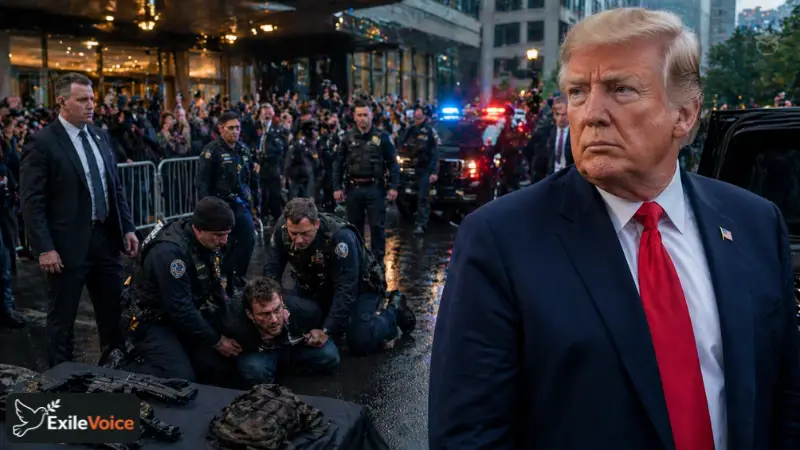
On April 27, 2026, the global political landscape was shaken by reports of the third assassination attempt on U.S. President Donald Trump during his political career. The incident, occurring within a high-security environment in Washington D.C., has sparked a firestorm of debate, ranging from official security failures to widespread public skepticism. While the suspect, identified as 31-year-old Cole Thomas Allen from California, was apprehended at a security checkpoint inside the Washington Hilton, the legal charges filed thus far have notably excluded a direct charge of attempted assassination, focusing instead on the possession of firearms in a restricted area and assault on federal officers.
The incident highlights a growing phenomenon in modern political discourse: the "information void." In the immediate aftermath of the event, credible information was scarce, leading to a surge in conspiracy theories across social platforms like X (formerly Twitter), Facebook, and TikTok. Data indicates that the term "staged" was used over 300,000 times within the first 24 hours. Critics point to the President’s low approval ratings and the ongoing conflict with Iran as potential motives for orchestrating a distraction. Conversely, others attribute the attempt to regional actors seeking to pressure the administration’s foreign policy.
Academic insights, specifically from the University of Michigan, suggest that the public is increasingly reshaping reality based on personal biases. Rather than seeking objective facts, individuals often pursue "confirmatory information" that aligns with their existing political beliefs. This fragmentation of truth is further complicated by the President’s own active online presence, where he often fans the flames of speculative narratives to consolidate his support base.
Beyond the immediate security breach, the event has reignited domestic policy debates. President Trump utilized the incident to advocate for the construction of a "gilded ballroom" within the White House grounds, arguing that private, secure venues are essential for presidential safety. This proposal, previously blocked by judicial oversight regarding excessive spending, is now being pushed by right-wing influencers as a matter of national security. As the investigation unfolds, the disconnect between official reports and public perception continues to widen, reflecting a society deeply divided by its information sources.