The recent security breach at the Hilton Hotel in Washington D.C., targeting President Donald Trump during the White House Correspondents’ Association Dinner, serves as a harrowing reminder of the escalating risks facing high-profile political figures. This incident, occurring on April 25, 2026, marks the second attempt on the former President's life, echoing the previous close-call in Ohio where a bullet narrowly missed its mark. The mechanics of this latest attempt read like a complex thriller, highlighting systemic vulnerabilities within high-stakes security protocols.
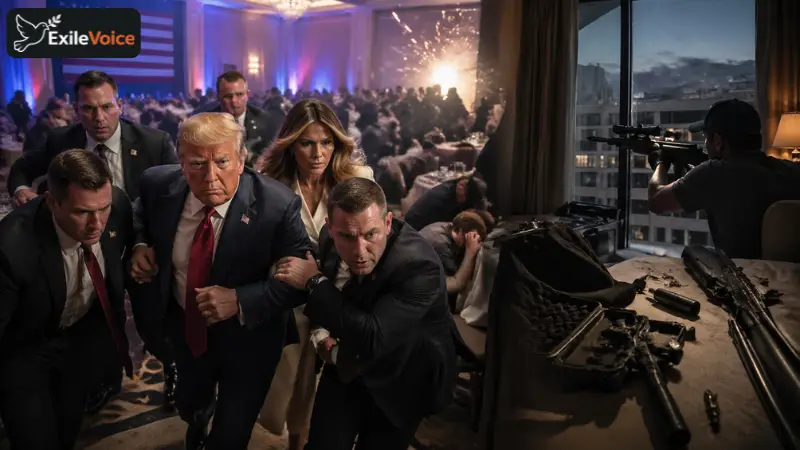
Reports indicate that the assailant, identified as Cole Allen, a 31-year-old schoolteacher from California, managed to embed himself within the hotel by registering as a guest. This strategic maneuver allowed him to bypass initial perimeter checks and access a non-secured room in close proximity to the ballroom. In this secluded space, he assembled a lethal arsenal, including a long-range rifle. The sophistication of the planning, smuggling components and assembling them on-site, points to a significant failure in pre-event sweeps and ongoing surveillance.
The actual moments of the attack were chaotic yet revealed the rapid-response capabilities of the Secret Service. As shots rang out between 8:30 PM and 8:36 PM, agents immediately shielded the former President, who was on stage with his wife, Melania Trump, and Vice President-elect JD Vance. While the primary target was extracted, the chaos in the room saw journalists and dignitaries taking cover under tables, a standard but desperate survival tactic in active shooter scenarios. A Secret Service agent reportedly took a direct hit to the chest; however, the high-quality ballistic vest prevented a fatality, a testament to the life-saving nature of advanced protective gear.
The aftermath of the event sparked immediate political discourse. Addressing the nation from the White House, Trump remained remarkably composed, emphasizing that the attack was not just on him, but on the principle of "free speech," given the journalistic nature of the event. Interestingly, despite initial speculation regarding foreign involvement, Trump suggested the actor likely operated in isolation. This incident will undoubtedly lead to a rigorous reassessment of Secret Service protocols, especially regarding the vetting of hotel guests and the securing of secondary rooms in venues hosting the nation's top leadership.