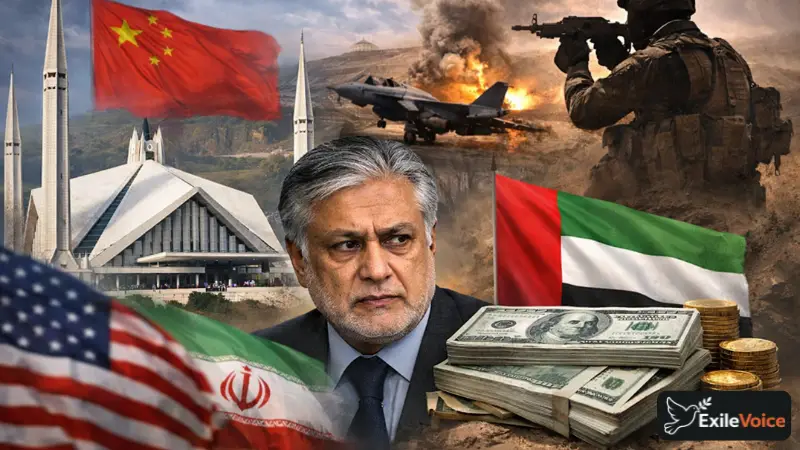
For nearly ten days, the Pakistani diplomatic machinery, supported by a significant state-led narrative, attempted to position Islamabad as the "center of global diplomacy." Following high-profile visits to Beijing and the hosting of foreign ministers from Saudi Arabia, Turkey, and Egypt, there was a palpable sense of optimism among state-aligned commentators. Predictions of a historic "Islamabad Accord" between the United States and Iran, potentially earning national leadership a Nobel Peace Prize, dominated social media. However, 35 days into the current regional conflict, that momentum has officially evaporated, leaving Pakistan’s mediation efforts "dead in the water."
The collapse of these talks is not merely a tactical setback but a reflection of Pakistan’s weakened internal and external standing. While Foreign Minister Ishaq Dar sought to leverage regional ties, the fundamental "mistrust factor" proved insurmountable. Iran reportedly refused to engage in Islamabad, viewing Pakistan’s recent mutual defense pact with Saudi Arabia as a compromise of its neutrality. Simultaneously, the United States remained largely unresponsive to the Pakistani overtures, with the Trump administration’s focus shifting toward direct warnings and a search-and-rescue mission for a missing pilot.
Furthermore, Pakistan’s attempt to bring China in as a formal "peace guarantor" faced a polite but firm rejection. Beijing’s refusal to act as an underwriter for Pakistan’s five-point peace initiative signals a lack of confidence in Islamabad's ability to deliver. In the cold world of geopolitics, a mediator’s strength is derived from its internal stability and economic independence. With Pakistan grappling with a cash-strapped economy and high fuel prices, its "middle power" aspirations were seen by regional players as an overextension of its actual influence.
The aftermath has been equally sobering. Instead of receiving economic concessions for its diplomatic labor, Pakistan faced a $3 billion repayment demand from the UAE, a move described as a "diplomatic failure" for the current administration. This "reverse Bismarck" effect, where small-minded leadership shrinks a large nation’s influence, has left Pakistan more isolated than before its diplomatic surge. The lesson is clear: external strength cannot be faked when internal fundamentals are in disarray.