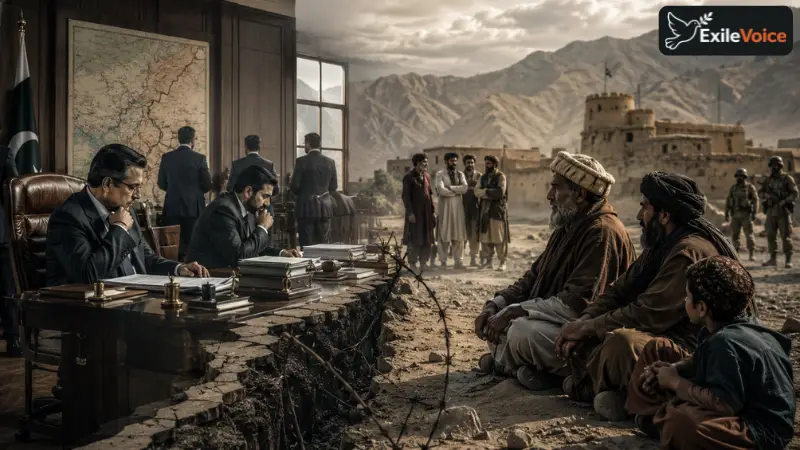
The administration of Balochistan has become a focal point for critics who argue that the province is being managed through an "outsourced" bureaucratic model, mirroring colonial-era patterns of governance. By filling essential administrative positions, such as the Secretary of Interior and the Secretary of Planning, with individuals who possess no ancestral, linguistic, or cultural connection to Balochistan, the central government is inadvertently deepening the rift between the state and the local population.
The core of the issue is the lack of "local ownership" in the administrative process. When a province is governed by individuals who do not speak the local tongues, they are inherently limited in their ability to understand grievances, mediate tribal disputes, or build trust with the community. This detachment is exacerbated when these bureaucrats are viewed primarily as agents of a centralized, distant power structure rather than advocates for the province's unique development needs.
This practice is particularly concerning given the volatile security climate. Effective administration in conflict-affected regions relies heavily on the ability of officials to engage directly with local leadership and citizens. By prioritizing administrative convenience or political appointments over regional expertise and local integration, the state risks alienating those whose cooperation is most needed to restore order.
Furthermore, the practice of frequent rotation of bureaucrats who are unfamiliar with the terrain creates a lack of institutional memory and continuity. When an official is parachuted into a high-stakes environment like Quetta from a vastly different socio-economic context, such as Punjab, the learning curve is steep, and the margin for error is razor-thin. Mistakes in such an environment are not merely administrative; they carry heavy human costs.
The critique of this model is not merely a complaint against individual officers, but an indictment of the structural approach to provincial governance. To move toward sustainable peace, the administration needs to cultivate a cadre of local civil servants who are empowered to govern their own regions. Investing in local talent, language-specific training, and decentralizing administrative power would be a significant step toward reversing the trend of alienation. Without this shift, the administration will continue to struggle against the tide of public discontent, regardless of how many high-level meetings are held in the capital.