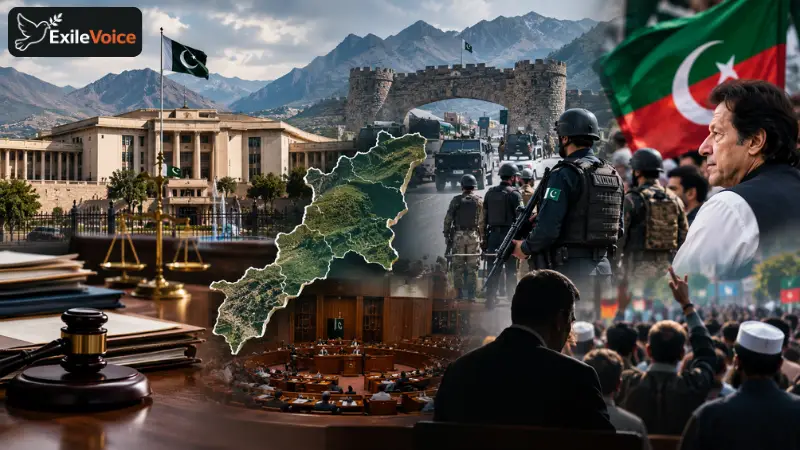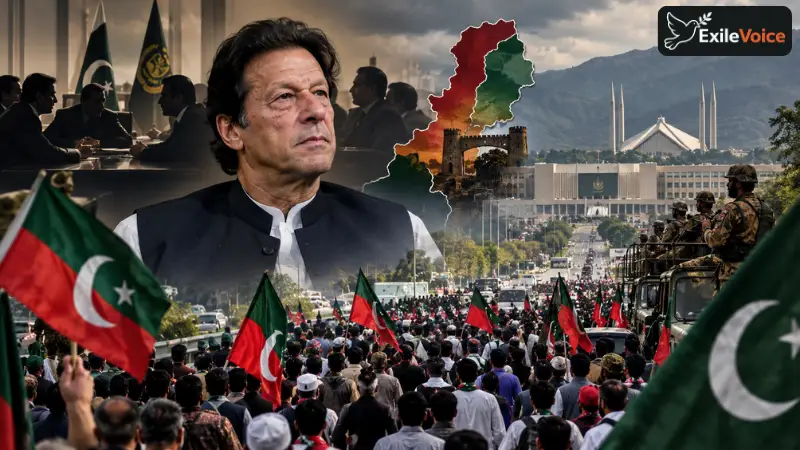
The failure of talks between Pakistan’s coalition government and opposition parties, led by Pakistan Tehreek-e-Insaf (PTI), marks a critical turning point in the country’s prolonged political impasse. Multi-round negotiations convened under the shadow of mounting public unrest came to an abrupt halt after the opposition accused government interlocutors of reneging on agreed terms. The immediate fallout has manifested as a high-stakes political confrontation, marked by the commencement of a nationwide long march originating from Waziristan and moving toward Islamabad, alongside growing threats of federal intervention in Khyber Pakhtunkhwa.
Central to the breakdown of negotiations was a dispute over the official draft summarizing agreed terms. Opposition representatives reported that an initial consensus reached during cross-party dialogues was fundamentally altered after being transmitted through executive channels. Key points of contention included access to imprisoned former Prime Minister Imran Khan, independent medical evaluations for Khan by designated private physicians, and official opposition involvement in counter-terrorism strategy oversight. The refusal of government negotiators to guarantee independent medical access or facilitate direct consultation between opposition committee leaders and Khan solidified the deadlock.
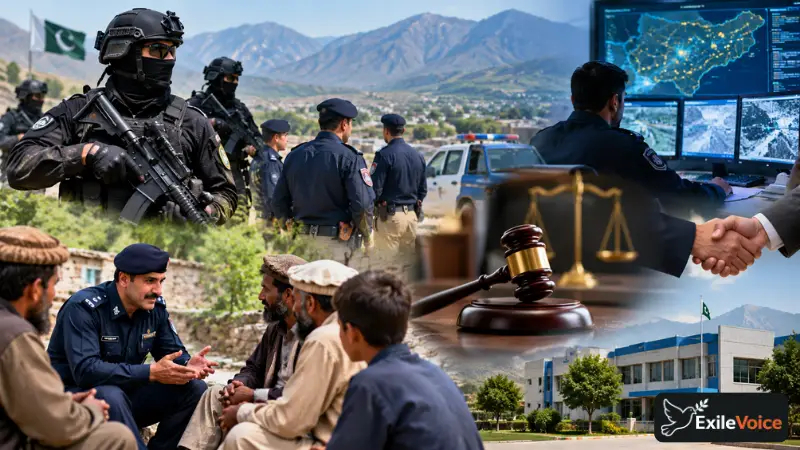
Simultaneously, political friction has escalated between federal authorities and the provincial government of Khyber Pakhtunkhwa. Federal coalition leaders, including Pakistan Peoples Party Chairman Bilawal Bhutto Zardari, have publicly raised the prospect of imposing Governor’s Rule or a state of emergency in the province. The justification advanced by federal figures centers on alleged non-cooperation from provincial authorities in regional security operations and counter-terrorism initiatives. Opposition leadership, however, strongly rejects this framing, characterizing federal warnings as an attempt to bypass democratic mandates and suppress political dissent.
The operational strategy of the newly launched long march involves a phased mobilization across key districts. Starting in South Waziristan and proceeding through Lakki Marwat, the rally is scheduled to traverse major urban hubs including Peshawar, Charsadda, Nowshera, Mardan, and Swabi before converging on the federal capital. Provincial leadership in Khyber Pakhtunkhwa has maintained that regional security strategies must rely on community engagement and transparent parliamentary consensus rather than purely kinetic operations, pointing to historical precedents where uncoordinated military actions failed to yield long-term stability.
As the long march advances, the political landscape remains highly volatile. The inability of formal political mechanisms to produce a mediated resolution highlights deep institutional divisions. With constitutional deadlines, judicial mandates, and street mobilization colliding, Pakistan faces an intensified period of policy uncertainty and governance challenges across its federal and provincial structures.