
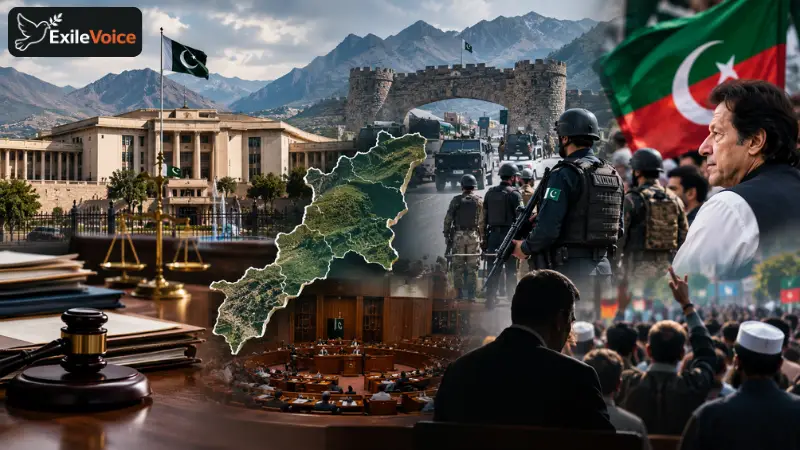
The current political landscape in Pakistan is witnessing intense administrative stress, particularly within the province of Khyber Pakhtunkhwa (KP). Following the imposition of emergency measures and gubernatorial oversight, administrative bodies have faced unprecedented scrutiny. Political analysts and commentators have highlighted the friction between federal governance strategies and provincial legislative mechanisms. The enforcement of regulatory tools such as the Maintenance of Public Order (MPO) ordinances has sparked legal debates regarding executive overreach, civil liberties, and the procedural timeline of governance interventions.
At the core of the ongoing administrative dialogue is the security paradigm in the region. Provincial leadership and federal representatives have engaged in public discourses regarding intelligence-based operations, law enforcement deployment, and infrastructural capacity building for local police forces. Critics have raised questions concerning the operational coordination between civil administrations and security apparatuses, emphasizing the need for robust institutional frameworks to manage regional security challenges effectively. Furthermore, internal dynamics within major political factions, such as the Pakistan Tehreek-e-Insaf (PTI), have faced internal friction, with discussions regarding party unity, legislative blocs, and strategic policy alignment dominating news cycles.
As regional authorities navigate these complex governance hurdles, public accountability, transparency in developmental expenditures, and administrative readiness remain critical points of discussion among political observers. The intersection of security mandates and democratic norms continues to shape the trajectory of political discourse in the region, calling for sustained institutional dialogue and adherence to constitutional frameworks.