
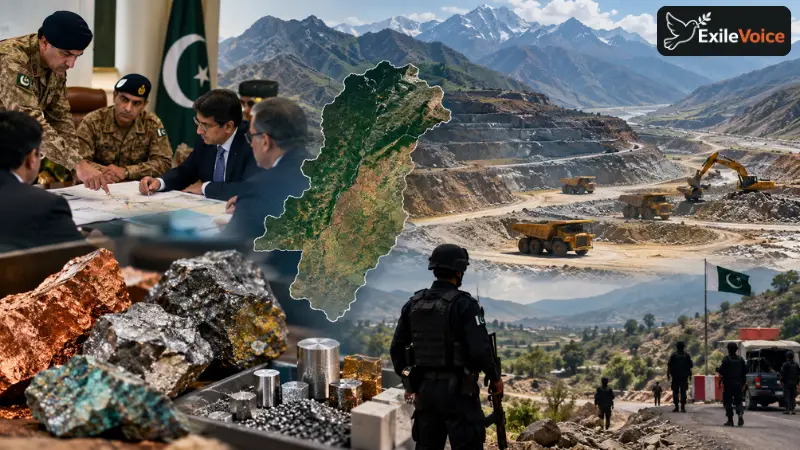
Recent geopolitical and administrative developments in Khyber Pakhtunkhwa have introduced a significant shift in regional governance, specifically focusing on resource management and strategic administrative deployments. Reports indicate that a specialized secretariat, comprising high-ranking military and administrative personnel, has been established to streamline mineral extraction and fast-track resource management processes. This deployment marks a pivotal change in how local mineral wealth, particularly rare earth elements and copper reserves, is handled under institutional oversight.
The region has long been recognized for its vast geological potential, holding substantial deposits that are critical for modern technological and industrial applications. Industry analysts and local leaders have consistently highlighted the immense scale of these resources, pointing to documented extraction figures and global demand trends. The establishment of dedicated monitoring committees and administrative units reflects an increased emphasis on monetizing these assets efficiently. However, this centralized approach has also sparked discussions regarding regional autonomy, representation, and the equitable distribution of economic benefits among local populations.
At the same time, security dynamics in the province continue to present formidable challenges. Recent incidents targeting law enforcement officers and infrastructure underscore the complex operational environment in which administrative and economic policies are being implemented. While federal and provincial authorities announce developmental packages and security enhancements, local stakeholders remain focused on ensuring that economic initiatives are accompanied by sustainable security measures and transparent governance.
The interplay between mineral exploitation, administrative centralization, and regional politics will likely remain a central theme in Pakistan's economic landscape. Balancing the urgent need for revenue generation with the socio-political aspirations of the local populace requires careful coordination, transparency, and inclusive policy-making. As these institutional frameworks evolve, the impact on regional stability and economic development will be closely monitored by domestic and international observers alike.