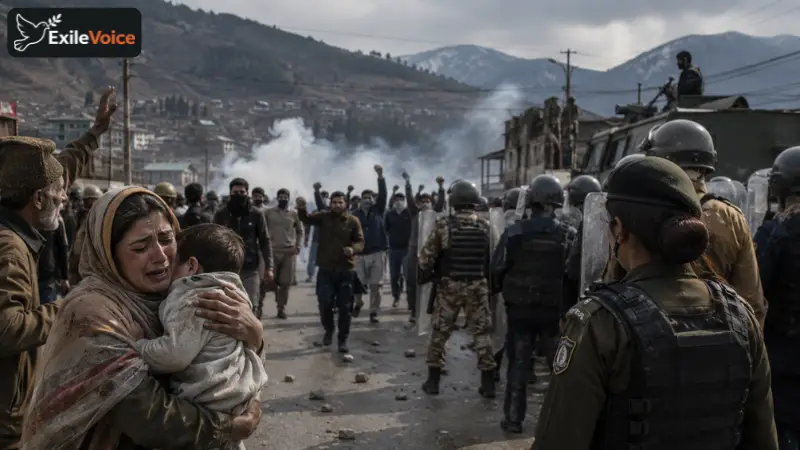
Azad Kashmir is currently witnessing significant civil unrest as the local population demands greater rights and economic relief. The situation has intensified following protests led by the Joint Awami Action Committee, which have been met with a heavy security presence, including the deployment of additional Rangers, police, and specialized female police units. Reports indicate that the region is facing a severe humanitarian crisis characterized by the scarcity of essential goods, including medicine and infant formula, alongside the suspension of internet and mobile services, and a paralyzed banking system.
The tension has been further exacerbated by clashes between protesters and law enforcement, resulting in casualties and injuries. While political leaders like Bilawal Bhutto Zardari have spoken about the need to address the grievances of the youth and ensure their right to governance, critics argue that the local government's actions, marked by continued crackdowns, directly contradict this rhetoric. The involvement of the current administration in the events unfolding in the region has led to widespread condemnation and a loss of public trust.
Furthermore, the situation presents a complex dilemma for authorities regarding upcoming observances, such as the July 13 Kashmir Martyrs' Day. With the Hurriyat Conference calling for observances in occupied Kashmir, the question remains whether the government in Azad Kashmir will permit similar protests and commemorations. Restricting such activities could lead to further backlash, while allowing them could potentially fuel anti-government sentiment. As the economic blockade persists and the humanitarian situation worsens, the region appears to be in a state of conflict that necessitates a peaceful, rights-based resolution rather than continued security-focused interventions.