The geopolitical landscape shifted dramatically within a single twelve-hour window as Donald Trump announced the cancellation of a high-level American delegation to Islamabad. The delegation, which was to include advisors Steve Witkoff and Jared Kushner, was positioned to engage in high-stakes diplomacy regarding the ongoing regional conflict involving Iran. However, Trump’s last-minute pivot, citing the inefficiency of an 18-hour flight for discussions that could occur via telecommunications, reveals a deeper psychological and strategic battle between Washington and Tehran.
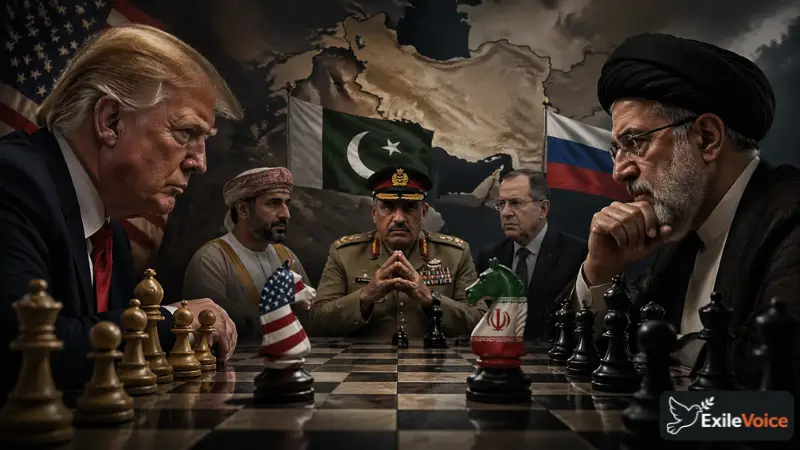
The cancellation underscores a "desperation of assumptions." Trump’s initial move to send the delegation appeared to be based on the assumption that Pakistan, particularly under the leadership of General Asim Munir, could exert enough pressure on the visiting Iranian delegation to force a face-to-face meeting. This tactic was designed to project an image of American control and dominance to the domestic public and international media. By framing the narrative as "I am not stuck; the Iranians are," Trump attempted to maintain a psychological upper hand. Yet, the Iranian move was more calculated. By ensuring their Foreign Minister Abbas Araghchi’s visit to Pakistan was framed strictly as a bilateral and regional tour, including stops in Oman and Russia, Tehran effectively neutralized the U.S. attempt at forced diplomacy.
In the realm of strategic maneuvering, this encounter is increasingly compared to a game of chess. While the United States possesses unparalleled military fire power and "nuclear reach," the Iranians have demonstrated a sophisticated level of mental presence and rational escalation. They have utilized Pakistan as a conduit for proposals while refusing to blink under the threat of direct confrontation. Trump’s repetitive rhetoric, "Iran cannot have a nuclear weapon", serves as a political camouflage. If a deal is eventually brokered where Iran agrees to IAEA supervision, Trump can claim victory. However, the current reality is a strategic stalemate where the "chess moves" of Tehran are proving more nimble than the "fire power" of Washington.